Feeds:
Posts
Comments

Archive for the ‘Lecture Notes’ Category

From the Federal Government on down there is a not so virtual alphabet soup (swamp?) of public and private organizations collaborating to protect and restore San Francisco’s wetlands. In fact as of Feb 2nd, it’s become an international concern with San Francisco Bay being named an Wetland of International Importance. Arthur Feinstein, our speaker on February 21st, 2013, has been part of this mix for along time as an Audubon and Sierra Club activist, and as a board member of the San Francisco Bay Joint Venture (SFBJV).
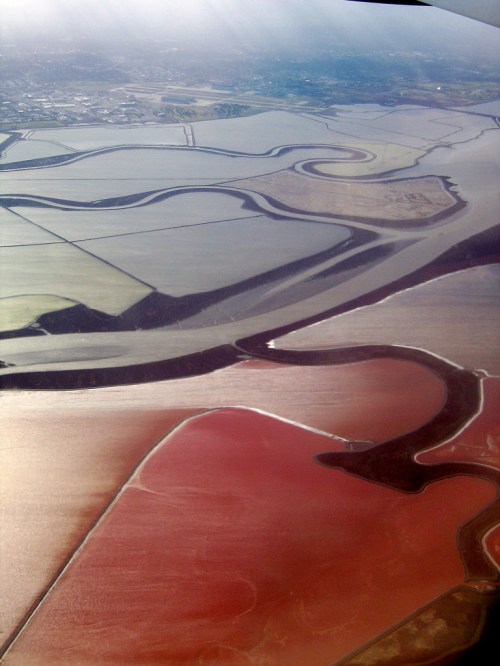
Salt Pond

This Joint Venture is one of 18 that were established by the Migratory Bird Act of 1971 to protect birdlife. The joint ventures originally got off the ground protecting ducks, building on the work of Ducks Unlimited, and their efforts to preserve habitat and species for hunting. These Joint Ventures were so successful that the Fish&Wildlife Service decided to expand the program to in essence save all the birds in the country — and now really goes beyond that to all species in general.

SFBJV — the Joint Venture that is smallest in area of all 18 — has three main areas in restoration: wetlands, riparian habitat, and associated uplands. It works with organizations like Audubon, Save the Bay, Sierra Club and government agencies like the Fish and Wildlife, that have funds. The joint venture’s board and staff work on things like acquiring land, doing evaluation and monitoring, project development and implementation, outreach, and most importantly funding support, looking to get the biggest bang for the buck in these restoration programs.

Arthur spent the rest of his talk walking through the projects up and down the bay looking at the challenges and successes of these projects. One thing that you might not expect is that wetlands restoration is a lot about earth moving. Dyked off areas of the bay begin to sink (think New Orleans). The most famous place locally for this is Alviso in the south bay 16′ below the water line. This means you can’t just breach a dyke, you have to bring in dirt and a lot of it to bring the bottom up.

Happily this leads to a fine talking point — restoration means construction jobs, which is a selling point which reaches past people who are primarily concerned about the environment into a broader community.

These projects can also take a lot of time. This might be negotiating with a land owner, like the Navy at Scagg’s Island (worried about the implications of past contracts with adjacent landowners), others require lots of study — and Army Corps of Engineers studies can take a long time. The South Bay’s wetland restoration program (the largest project in the country outside of the Everglades) will take 50 years, with time built in for study and evaluation. The work is as much art as science, it’s not always certain how things will work. Inshore communities also need to be protected against potential flooding.

There are unintended environmental consequences as well — birds like Canvasbacks like shallow water salt ponds, but with some of these being removed this bird is not coming back in the same numbers. Snowy Plovers have been using dry salt ponds for nesting ground. Some of the restoration projects are now trying to take this into account — leaving a variety ot habitat.

There are all sorts of political & legal battles in this too — elections deciding between development and restoration, at places like Redwood City (46 votes decided one referendum on Bair Island) and Cullinan Ranch (which 20 years ago nearly became a Marina).

All of these things take a lot of effort from a lot of different people and organizations. What we get out of it — the past 30-40 years to make the Bay a better place — includes some intangibles: more resilience against climate change events like rising seas, healthier bay ecosystems, better spawning grounds, and better fisheries, but we also get to see beautiful things like the Clapper Rail returning to San Francisco at Heron’s Head park, and maybe all this effort has also gone to help with the return of harbor porpoises, the otter at Sutro Baths, and the huge herring runs the last two years has brought. I’m looking forward to what the next 30-40 years of restoration might bring.

If you want to play a part — you can look for opportunities in many places, but I will leave it with http://sfbayjv.org today.
Read Full Post »

Joel Pomerantz Explains Everything

It’s taken me a while to get around to typing up these notes, but the memory of Joel’s talk is still strong (plus I have notes :)! He was with us November 15th, Joel led us around San Francisco with all sorts of delightful tidbits of San Francisco as it is and was: from a living wall on Drew high school, the Bradbury waterworks, lakes on maps from Golden Gate Park in 1872 where there are no lakes, the Magnolia tree that blooms in february which makes for an excellent way to press words from plaques, the pepper and cork trees in Dolores park, the trees on the Park Presidio divide that offer species that grow well in San Francisco, and the Tenderloin National Forest at Coen alley.

There was also his tour of SF water: from the reservoir that used to be where the Safeway is at Market below the Mint (which produces memorial coins and coins on contract) where there was once a hill and the bottom of the reservoir was 30′ higher and the water surface 100′ higher, Laguna Honda which was once a lake then made into a reservoir, aqueducts that carried SF water too and fro, the water that used to be brought over from Sausalito and sold by the bucket, the Pilarcitos gravity-fed flume that broke in the 1906 earthquake which was never rebuilt because of  Hetch Hetchy water, the water tank that used to be on Tank Hill where you can still see the rivet marks in the concrete, a bridge in GGP park that didn’t cross water but kept the people up and away from the horses and carriages that used to promenade in the area, Mission Creek which isn’t the original mission creek but defined and shaped by fill, and the 4th street bridge that crosses it with its huge fake counterweight.

And then there were the hills and sands: the black sand of ocean beach that isn’t pollution, but is magnetic sand, magnetite from weathered granite, the sands that used to spread across the city, 60′-80′ dunes downtown and through the Mission where you’ll still find sandy soil, one of the reasons it flopped as an agricultural area, the twin peaks that aren’t twins, on being chert the other basalt, one slowly crumbling away, Red Rock Island a part of 3 islands, privately owned and once a source of red rock for tinting paint, and for ship ballast, the Senole water temple, the old aqueduct known as the haunted sidewalk of Niles Canyon, the quarry in San Pablo Straight that goes down below the bay, and the springs that are still found in the city, but are sadly not tracked (and are required to be diverted into the sewer system).

In other words, some of the many wonders and oddities that San Francisco and region provide to us, if we are willing to take the time to seek it out.

If you want to hear more from Joel, check out his Thinkwalk tours.


Read Full Post »

An Era of Restoration & Understanding

Sometime in the 70s a murder victim washed up on a bay shore. The police knew to go ask a scientist — where might this body have come from? The answer it turned out was the Golden Gate Bridge. Gangs used to think of it as a good place to dump bodies, thinking they’d soon be carried out to sea, never to be seen again. But our bay waters are more complicated than that. It turns out that the surface water tends to move out to see, but the undercurrents — where a dead body might sink — move inland.

Scientists have spent a good amount of effort and equipment puzzling this out. Not dead bodies per se, but with boats like the Polaris and the Long Fin that are out there collecting and measuring.

The story of our San Francisco Bay is a long one, and for a long time a sad one – impacted as it is by all the hunting, mining, fishing, filling, draining, blowing things up, alien invasions, trash, and dam building that has effected its waters over the last 150 odd years in particular.

Many of those impacts are ongoing and difficult to control (alien species being a good case in point). But the last 50 years has seen an increase in those who would wish to protect, understand, and restore our waters. No longer does the bay stink, and serve as the collective trash dump.

There us still plenty of nature to be found here – the estuary is open ended a mixing bowl of rivers and tides and the bay still serves as a murky nursery to many species of fish. Little fish thrive, there are seals, sea lions, and the only recently returned porpoise. The larger estuary is still a stopover on the Pacific Flyway.

What many people and organizations are working on now is bringing more of that nature back. Bringing us back to a hopefully healthier mix of urban and natural: there are grand 50 years plans to restore salt ponds to wetland, which have has already begun with great signs; plans to restore underwater bay meadows of eel grass — a good habitat for all sorts of creatures and which secures the mud; plans to see if beds of Olympia oysters can be built. We are aiding some species more at risk than others — like for the Clapper Rail — building floating homes where they are safer from all the raccoons and other meso-predators out there.

There are of course risks and additional challenges in all of this — plans for more fill, or the possibility of erosion of the bay bottom which has been securing gold mining mercury for decades. And this is of course, where we hope the science will come in to aid our understanding, help us meet challenges, shift courses, and have a healthy bay for us all to enjoy.

Read Full Post »

Life Cycles

Becky Jaffe is a biophiliac. E.O. Wilson made the term up to describe “the connection human beings subconsciously seek with the rest of life.” Except that for Becky, that connection is sought consciously with great care and effort. She is a photographer, an artist, and amateur naturalist with a keen eye for what the rest of life has to offer. A favorite subject of hers is insects, watching them peer back up at her, but this past lecture (9/20 Bay Area Life Cycles), Becky gave us a tour, not so much of place, but of time — and the creatures that can be found. One of the most delightful things about nature is about how regular she can be in her habits:

Photo by Becky Jaffe "Nest Builder"

September finds tarantula’s migrating. A good spot to find these is on Mt Diablo, as the males come out to look for the decorated burrows of females.

In October, preying mantis like it hot and can be found mating in places like Walnut Creek. You might see a female eat the head or entirety of her consort. or not, as it doesn’t ALWAYS happen.

Sandhill cranes come to Lodi in November – flocks half a million strong. There’s a dictionary by which you can decode their elaborate dances – performed in courtship, or for their mate of 25-30 years.

In Monterey in December you might find Bald Eagles starting to build their massive nests.

January, newts come out from underneath the leaf detritus into the creeks. The male and female clasp together for hours, while other males mights form tussling balls to and combat and lay eggs. There was some discussion on their toxicity and the evolutionary “war” waged between them and garter snakes (make sure to wash your hands if you ever pick one up).

February, in claremont canyon, you a pair of nesting great horned owl who caused a stir this past year swooping down on dogs. The owl will come back to the same tree, the same branch. Everyone was talking about this pair, and a five year old was overhead saying, “better than TV!”

In March, male elephant seals battle at Ano Nuevo state park. Or you might find a tranny wild turkey — 20% of females have the same beard out of the chest as the males. Or lady bugs in Redwook Park clustered together in the thousands.

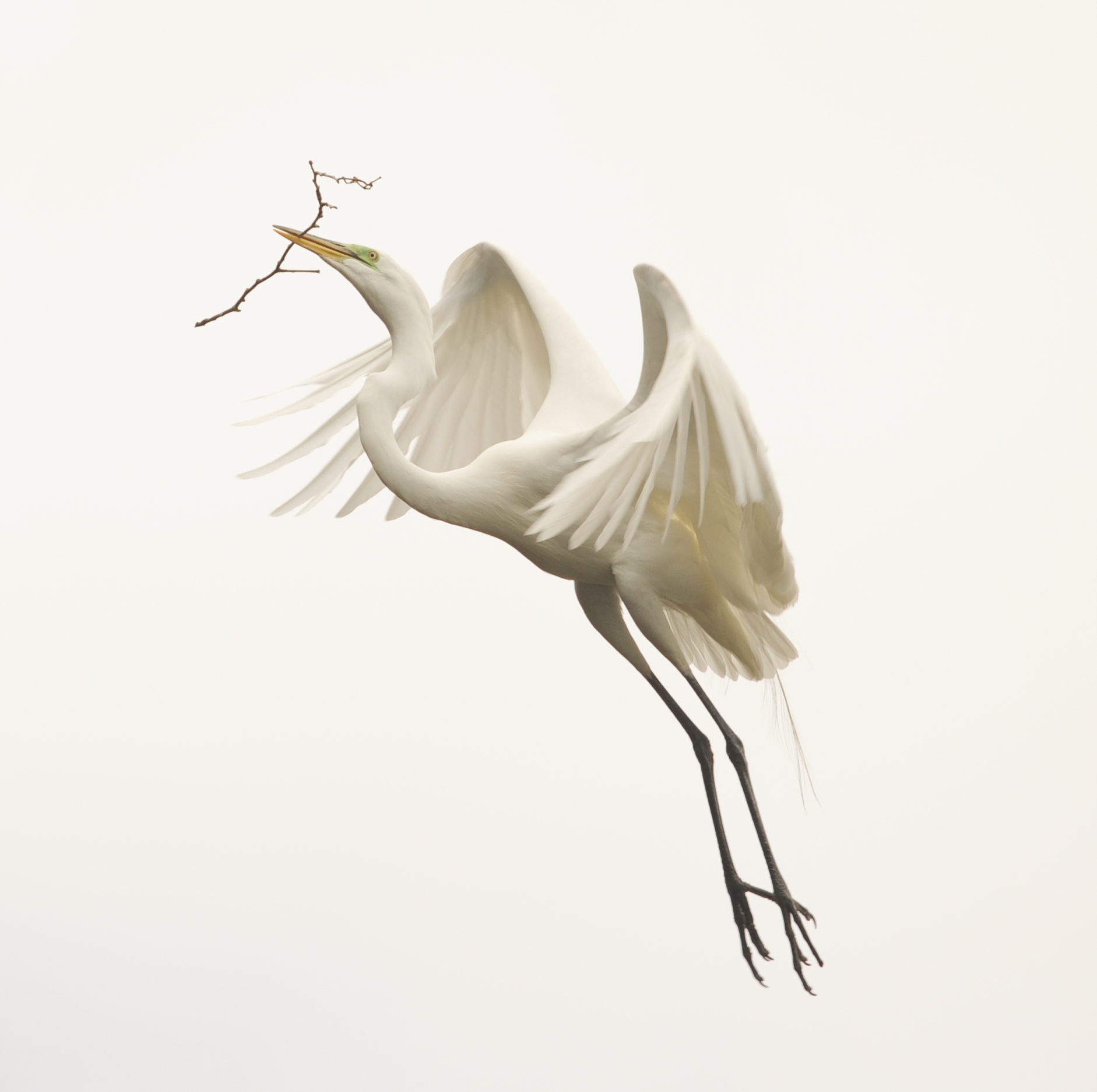
April has Egrets nesting together in Alameda, possibly to protect themselves from marauding corvids – even though they squabble amongst themselves constantly. Becky has some amazing photos of one male proudly displaying twigs he tore from trees. His mate if he had one would go on to actually build the nest — but he was apparently still looking.

She also told the story of one particular Egret parasite who has a life cycle that includes a snail, a tadpole, and frogs who end up growing extra legs – making them easy targets for Egrets where the cycle begins anew. There are apparently 4 parasites for every non-parasite!

In May, dragon flies and damsel flies mate as strange contortionists. The different cycles of insects we often ignore beyond caterpillars, but many other species have their own interesting cycles of growth.

Go to Lake Merritt in June, and you might find “Hank” the white pelican joined by other migrating pelicans. Hank was injured and can not fly, but over the years he seems to have accumulated friends who come to visit him while on their way to other destinations. You’ll also might find the nests of cormorants.

July has swallowtails emerging from cocoons, beavers building dams in Martinez, and hummingbirds building their gorgeous little expandable nests (Becky passed around a sample).

Hawk Hill in August to see the migration of these fabulous creatures.

All this and much much more for those who have a mind to pay attention.

Whoever you are, no matter how lonely,
the world offers itself to your imagination,
calls to you like the wild geese, harsh and exciting –
over and over announcing your place
in the family of things.
– Mary Oliver


Read Full Post »

The Ethics of Foraging

When he was a boy, Jonah Raskin’s father used to take them out down the beach at low tide,  and below the water line looking for clams. They’d occasionally fall into arguments with their neighbors, but his father — a lawyer — knew his business, the property line stops at the waterline. He also brought home perhaps another important lesson — don’t take home more than you need.

Jonah Raskin now lives on an old farm in Sonoma, and gleans from old orchard trees,  a neighbor farmer lets him pick what he needs from his fields, and goes out know and again for mushrooms.

Mushroom pickers delight in sharing recipes for their finds, but are notoriously secretive about their locations. Locations are jealously guarded secrets because people fear coming back to their spot and finding nothing left.

Leaving something behind is a big part of a foragers ethic — not just leaving it for others, but leaving something to continue growing. Jonah Raskin once recalled pulling a friend up off the ground to get the friend to stop, so consumed he was by the idea of getting it all (the impulse perhaps that underlies the success of places like CostCo!).

And this is the dilemma that underlies foraging, or at least the continued expansion of foraging — if significant numbers of people did it, we could strip the land bare. Jonah started the talk talking about the definitions of foraging — and one image is that of armies having foragers marching across the land taking everything and anything they could lay their hands on.

We talked about mushrooms of course, but also hunting, and fishing, berry picking, snail eating, looking for roots, stalking asparagus (read Euell Gibbons), and things like nettles and miner’s lettuce.

As an activity to bring food from the wild to ones table, there is a lot to recommend foraging. It tastes better. It gets us outdoors. It connects people to the outdoors in ways unlike any other activity. Jonah has met more than a few Native Americans gathering, and has come to more of an understanding the reverence for which they hold those things they take and eat. None of it we can take for granted. From early on, humans have sadly proved to have great capacity to reduce what nature has to offer.

As a bonus, here is a great Robert Haas poems Jonah read:

Picking Blackberries with a Friend Who Has Been Reading Jacques Lacan

(there was another: Fall, which I was unable to find online)

Read Full Post »

Commuturalism & Ravens

“Commuturalism” I’ll define as using ones commute as a time to practice being a naturalist – to paying attention to the nature I find on my commute. I’m lucky to live in a city where I have a job to which I can bike or walk.

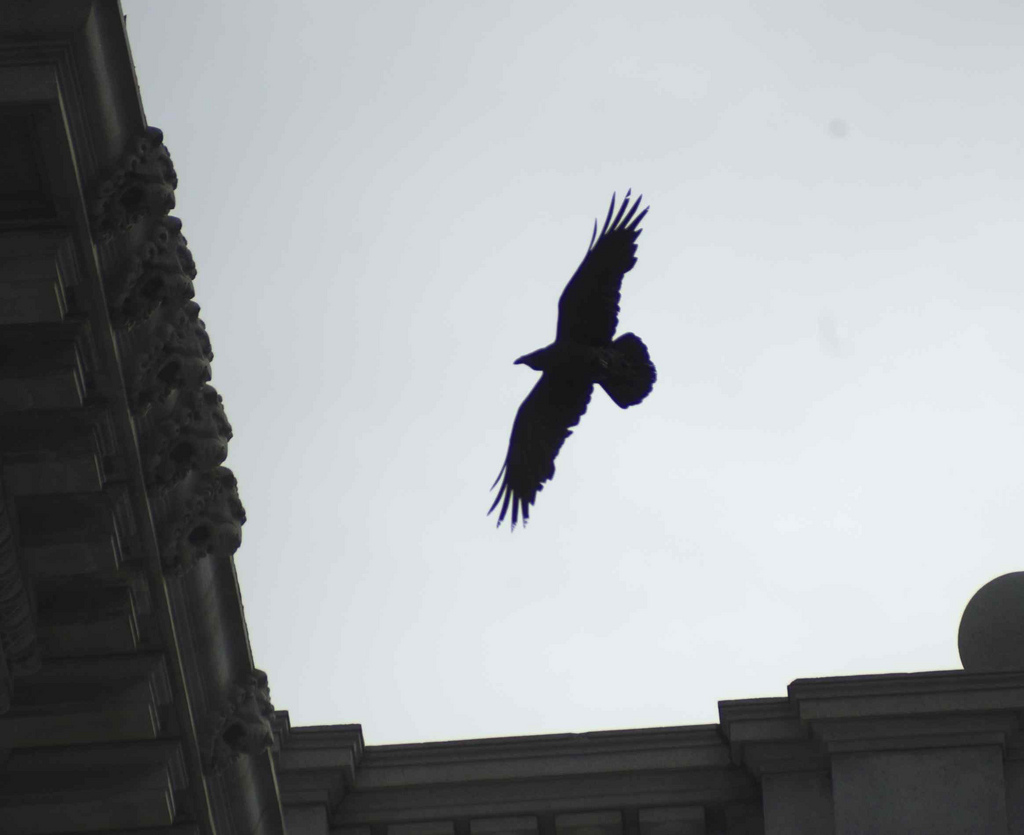
My interest in ravens started in earnest a few years ago. I stopped to watch a raven flying at 7th and Mission above the plaza of the new federal building. It was a beautiful thing. What really got my attention though was when it flew into a nest high up on a federal courthouse.

For the next couple months, I stopped by nearly every day to watch the progress of a raven pair, bringing up 4 nestlings into the world. After they’d flown, I started to pay more attention, and as the year passed I started to write things down, and started to ask questions. The first most obvious question: would they come back?

The other thing that kept me going, was something I’ve learned over time at all these other lectures I’ve come to, and had a hand in arranging (full props to Philip Gerrie for that task). That is how often a question comes up to which the lecturer doesn’t know the answer. And as I started to read about ravens, I felt there were plenty of gaps, plenty of things that all these information sources didn’t talk about.

And those ravens did come back, until they were driven off by crows. Which lead to more questions, and the need for me to actually be able to differentiate the two. I began altering my commuting route, and eventually found another pair of ravens, and then a couple more.

This year, I found 11 active nests mostly on the north eastern side of the city, with a couple outliers in the south. 6 of these nests were on trees, 1 was on a ship, 1 was on a sign, 3 were on buildings, and one was on a bridge.

In the lecture, I talked about the history of ravens in general, their distribution, and their distribution and numbers here in San Francisco.

I spent a good portion of the lecture going over the difficulties of identifying a raven and a crow. Ravens are bigger, have massive beaks, longer wings, a wedge shaped tail that’s more ragged when straight. However all these clues can be meaningless when the bird is not that far away.

There are other clues: behavioral – ravens fly higher and will ride thermals , crows tend to nest with some helpers, raven nests are more visible. I’ve found the easiest way to find a raven, and sometimes the only sure way to know, is by sound. Ravens have a much more varied sound range, and calls that are distinct from crows.

I spent the last third of the lecture going through the lives of the ravens I’ve met, talking about how they nest, the odd choices they seem to sometimes make, the difficulties that the parents and nestlings have. I spoke on what they eat, where they sleep, and how they raise their fledglings.

We ended the talk with talking about some of the problems ravens cause putting more pressure on populations of ground nesting birds in particular – the snowy plover chief among them. Ravens are here in numbers now because ultimately we leave a lot of food around for them, but as smart, opportunistic creatures, that is not the only thing they’ll eat.

I suggested at the end of the lecture that what we need is better data, in particular about their overall numbers, and their habits through the city: how the flocks move, to where, and when.

If your interested in helping out, or if you have any information about raven nests, or roost locations, please drop me an email at acotter@nonsensical.com.

If you have your own SF raven stories to share, you can send them to me by email, or share them in the comments below. I’ll hopefully be making a slightly simpler guide to identifying crows and ravens, with a better intro to how they sound. In the meantime:

Here are the  slides from my lecture. (slightly edited from the night of the lecture)

P.S. Thanks again my colleague Philip for trusting enough to let me speak, and thanks to my wife for putting up with my strange outings, and capacity to stop dead in the street to listen to birds.

Read Full Post »

When Glenn Lym first moved to SOMA, as an architect he quickly noticed that things were a little out of whack. Buildings tilted here, streets cracked there – nothing was straight. As he began to look into it, what unfolded was a story of how downtown San Francisco was changed from a field of dunes to a street gridded flatland.

Of course, that’s hard to imagine these days. It’s hard to think that our Market street — along more or less flat straight shot to the wharf — was a non-obvious even audacious idea. The truth is that downtown was the last stop of the sands being blown across the peninsula. To make the gridded streets we have today, road builders had to cut through huge sand dunes.

Glenn made this more real through photos and a 3D model he’s built using maps done by U.S. coastal surveys around the time of the Civil War — the dunescape was an important feature of the land.

The dunes in those days were thought of as being the abode of thieves and vagabonds, not something to be preserved let alone protected. They were slowly and surely carried off and used as fill to further expand the city, the 60′ dune at 2nd and Market, the 120′ dune further up Market.

Glenn talked about the development of SOMA, Rincon, Happy Valley — the chief residential area of the city for a long time –, the Hayes street marsh upon which many of those sinking SOMA buildings are built on,  the private plank roads that were built out over the sand to the flat and desirable Mission area.

The sand reached the edge of the Mission district, Glenn showed a picture of Woodward Gardens built on a dune. But it was not the dunes alone that were removed, things like Rincon Hill and the Clinton mound were good solid rock.

It is amazing to think of the effort, industry, and vision required to do all of that — in such a relatively short period of time changing the face of this place. It seems like we would be hard put to recognize this place if we had a chance to go back.

Glenn also showed a video on the history of Golden Gate park, which you can watch yourself online:

Part two is also available on YouTube. Or you can watch it in higher resolution in its entirety on Glenn’s site.

Also worth watching, are Glenn’s other videos from his HERE series.

Read Full Post »

San Bruno Mountain

A number of years ago, Dave Schooley of San Bruno Mountain Watch, was ready to give up the fight, move on, find some other pastures. He did some travelling, and ended up at San Bruno mountain in Italy. There he ran into a local who been born in Half Moon Bay and knew both mountains. The one in Italy had a monestary on it, one that had devoted itself to nature, and had nurtured their mountain. It renewed Dave’s desire to carry on the fight back here in California.

He has been working to protect San Bruno mountain for 45 years, and there are still threats chipping away at what is left of the San Bruno’s natural state. Dave gave us a tour of the mountain, its canyons, dense scrub, oak woodlands, its foxes, coyotes, and mountain lions, its wild flowers, and birds, and its long history. There have been humans around and on the mountain for thousands of years, as evidenced by any number of shell mounds.

The mountain might have been developed much earlier, without much of a fight however, if it had not been for garbage. As the areas around train tracks between Brisbane and Candlestick became a dumping ground for San Francisco, there wasn’t much interest in living next to the smells of rotting garbage.

Real threats came back to the mountain when the Bay Area as a whole began to wake up to the state of the environment and the bay itself. With the area cleaned up, great hopes began to arise about what could be done. There was even plans to shave the top of the mountain off and make high rises. Most of the mountain at the time was owned by the Crocker Family. While there is land preserved as park, land donated to and donated by the county, there is still plenty of private land that might be developed.

Much of the fight has centered around endangered species like the Mission blue butterfly. The butterfly’s endangered status saved the mountain from further development. That and the efforts of people like Dave Schooley, and all those who came out to fight and protest development plans. The big dividing line in mountain activists has been around endangered species on private land. A loophole to the ESA, called Habitat Conservation Plans were invented at this time. It allows landowners to develop their land, provided they can recreate that habitat elsewhere. In practice this has not worked out. It’s lack of accountability, and test-ability aside, the practice of using HCPs has now spread nation wide.

The problems and challenges aside, Dave, still seems to have great hopes for the mountains and the wider region… proposing wild life corridors between the mountain and Lake Merced, McClaren, and lands to the south.

More information:

Read Full Post »

Drawing the Place We Live

Artists Nancy King & Mary Swanson met in an art class not too long ago. They became fast friends and embarked on a singular project to draw a natural cross section of San Francisco.

The 16′ long panoramic drawing shows nine of San Francisco’s habitats with their birds, animals and plants, from sea to bay: ocean cliffs, cypress forests, marsh, meadow, rocky hills,  grasslands, oak, coastal scrub, and tidal wetlands.

Drawing all this in “plein air” is not a comfortable thing, and Nancy & Mary were often cold, wet, hot, thirsty (probably often in the same day, given SF weather!). They persevered carrying their sketchbooks, water color paper, pencils, and water color, and they kept drawing for over a year. Nancy and Mary would sti down and sketch — divvying up the background, drawing half of  scene, and sketch, and sketch all the wildlife they saw.

In all of this they felt they came to understand the place a lot better, by paying attention to the ebbs and flow of the nature around us. From being watched by curious corvids on the cliffs, to coming across grazing goats near Heron’s Head park, to watching the beautiful courtship rituals of Grebes, they were always coming across surprises.

This slideshow requires JavaScript.

Read Full Post »

It was 2008 when they began to see them: Harbor Porpoises slipping into the bay on high tides. They had not been seen there since the 40s. During WWII, a large net strung across the bay to keep enemy submarines out, also kept any other sizable fish out. Pollution in the bay may have also been a part of keeping them away– the Bay was more precious as a dumping ground than a natural resource.

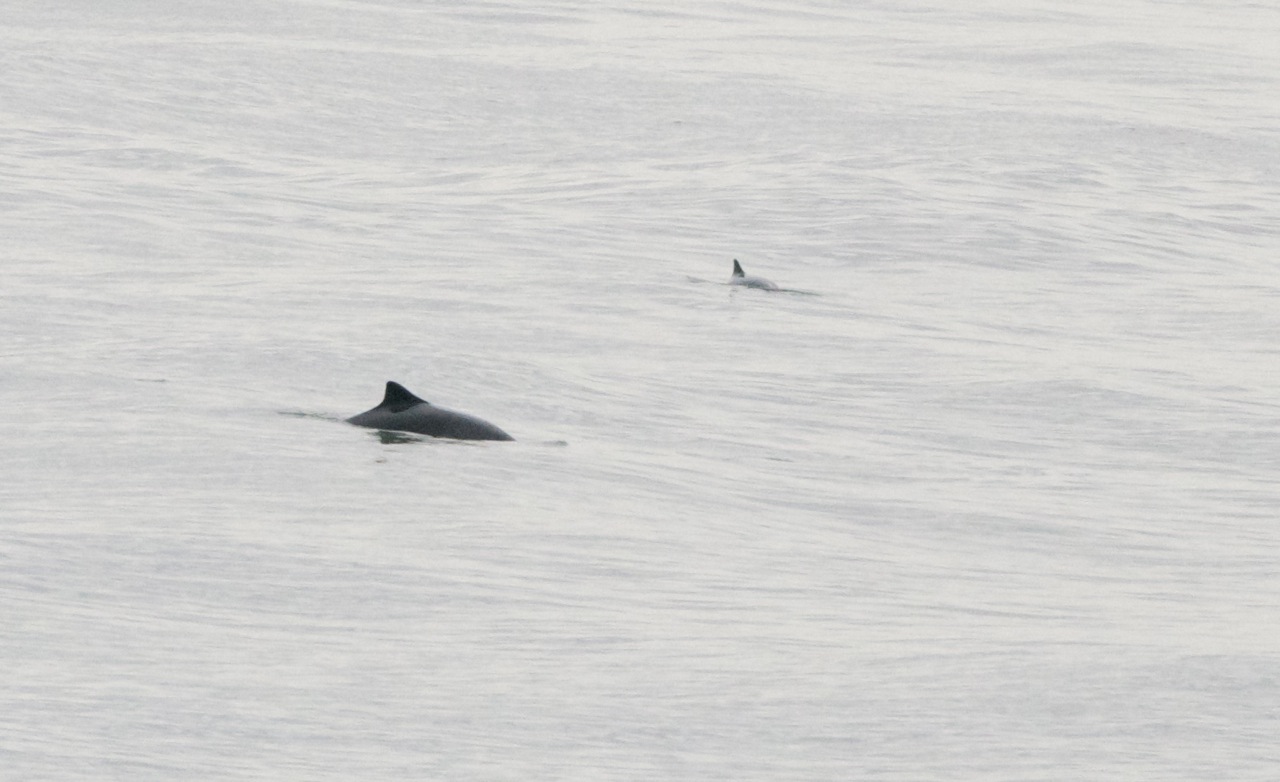
Harbor Porpoises from Cavallo Point

Happily, we know the Bay is doing better than it has for a long time, and this is yet another sign. It turns out that the Golden Gate Bridge is also an excellent observation platform. From the bridge and by boat, Golden Gate Cetacean Research, has been taking thousands of pictures to try an document this somewhat shy and elusive species. In logging all the hours taking those photos, Bill Keener and his colleagues, have learned more about Harbor Porpoises than any previous research anywhere else.

There is of course the things that are generally known. Porpoises  are the smallest member of the whale family. The harbor porpoise is one of 6 species of porpoise — up to around 5 feet long, a 150 pounds, and living for 10-12 years. Dolphins and porpoises were once though of as the same thing, but porpoises have a shorter beaks, and flattened spad-shaped teeth. Porpoises are also prefer cold waters, whereas dolphins can more generally be found in warm waters. They eat different fish, and porpoises do not have the same intelligence.

The whales in general are only very, very distantly related to pinnipeds: seals and sea-lions. Cetaceans originate from hoofed animals, whereas pinnipeds are more closely related to dogs.

Now the bridge and the bay (they have a permit to approach the animals by boat as well) are allowing Keener and his colleagues to learn a lot more. For the first time they’ve been able to identify individuals. From skin tones,  markings, and scars they’ve  identified almost 250 individuals. This takes a lot of work, not just taking all the photos (nearly 1000 a week), but reviewing them and matching them up to other photos, known and unknown individuals.

Nearly 25% have scars of one sort or another. Many look to have been made by fishing gear, a few by sharks, prop scars, but others mysterious. They’ve seen porpoises with skin lesions and copepod parasites hanging from them.

The porpoises come into the bay to take advantage of the bounty of the bay created by strong tidal fluctuations, where the river meets the sea, and the mixing of water columns where water lower down hits the cavallo spire just inside the bay, and brings lots of goodies up. The harbor porpoises come in to hunt anchovies, smelt, and squid, going under water for 60 seconds or so before coming back up for air (they can probably go under water for 5-10 minutes, but a minute is the norm). They don’t spend much time at the surface however. Though they can be seen to hunt by swimming on their side and spinning. Like dolphins they hunt with sonar, and an underwater microphone is being added to help track them.

The gold mine that the GGB is for studying porpoises though has been in seeing never before seen social behavior. Porpoises weren’t really believed to have any, but it is clear they gather in small groups of 5-7. But even better than that has been witnessing porpoise mating behavior. It is a quick affair. Porpoises have the big testes, 4% larger than their brain, the same size as the 50′ fin whale. The strategy is mate fast and mate often. Males swim up from behind, on the left side (this has been a mystery — it is speculated that it has to do with the asymmetry of their sonar) and often explode out of the water in the attempt to mate, their sex often on display. Female porpoises seem to take it as it comes, no courtship seemingly required, and there is no fighting between the males.

Gestation is almost 11 months long, and it seems that female porpoises might be pregnant or lactating their whole adult life. This is one of the questions the researchers have and hope to answer with patient observation.

To see them, head for the Golden Gate at a strong high tide… the researchers have seen as many as 115 passing under the bridge. This happens all year long. You can see them off cavallo point after the tide begins to ebb (where the photo above comes from).

You might also see dolphins. Dolphins have been coming into the bay since 1982 when unusually warm waters led them north. There are about 450 bottlenose dolphins who are known as a coastal sub species who like our rocky shores. Then tend to come in hugging the coast and baker beach, swimming in along Crissy field, likely looking for salmon, two or three times a week in the spring.

Read Full Post »

« Newer Posts - Older Posts »