We set up a little survey about the lecture series. We would love to have your feedback about the series and learn more about you… Thanks for your time!
Philip has been working hard and has filled in the first 6 months of our 2011 schedule. Happy Holidays!
2011
1/20 The Wild World of Frogs – Dr. Kerry Kriger, Founder of SAVE THE FROGS, introduces us to frogs, why they are disappearing worldwide and what can be done to save them.
2/17 The Islands of San Francisco Bay – James Martin discusses his book, the Islands of San Francisco Bay, documenting the wildness of their habitats, and the unique ecology of the Bay.
3/17 Trails of San Francisco – Ben Pease, freelance cartographer, will share some of his favorite walks on SF trails, parks, and neighborhoods from his new book Walker’s Map of San Francisco.
4/21 The Mystery of Laguna Dolores – Christopher Richard, Curator of Aquatic Biology at Oakland Museum reexamines the “now vanished” lake at the heart of the founding myth of SF.
5/19 Who Killed Off the Oysters of SF Bay? – Marine Biologist, Andrew Cohen, will talk about our once-abundant native oysters, with excursions into history, biology, geology, and archaeology.
6/16 Getting to the Bottom of the Bay –
Marilyn Latta, restoration ecologist, will show us the Bay’s thriving habitats of sand waves, eelgrass, shellfish beds, rocky outcrops, shoals, and channel banks.
Posted in Upcoming Events |
Josiah Clark’s talk was an excellent wrap up to our year. Josiah’s work as an ecologist focuses on where the wild can fit into our urban centers. How we can take the highly fragmented green spaces of our cities and make them resilient and sustainable for the “last of the least and the best of the rest.”
The most fundamental aspect of that work is making these green spaces functional breeding areas. Keys to this is to have a lot of biodiversity (both of species and within species), and building up native plant communities, where communities is the operative word. Complex mashups of plants create all the more opportunities for all sorts of wildlife to thrive.
But each different area even within such a small city as San Francisco, can often need different management strategies. These strategies often hinge on understanding what the disturbance regimes (erosion, wind, floods, and nutrients) are like in a given area: for instance high tides at Crissy fields, fires (or the lack thereof) on San Bruno mountain, or wind blown dunes. Areas like dunes, serpentine and bluffs have poor nutrient soils, but because of their limits, often leaves native plants with better chances. Often times those disturbance regimes are the things that native plants were adapted to, and humans having built up or mitigated their affects has been to the detriment of native plants (like fire adapted coastal scrub). Our last remaining native rodent the gopher even provides positive disturbance, creating erosion where it otherwise would not happen.
Josiah then led us through a few case studies: the Green Hairstreak Project, Nutall’s White Crowned Sparrow in the Bison paddock of Golden Gate Park, and the Pacific Chorus Frog. And how these were managed with all these things in mind.
And speakers have been bringing to us other examples of this all year long: Liam O’Brien talking on restoring the mission blue, Matthew Bettelheim and the western pond turtle, Brent Plater and Sharp park, John Bourgeois and salt pond restoration, our speakers on Yerba Buena island, Vance T. Vredenburg on frogs in the Sierras, and Camilla Fox showing us Coyotes in the city. We also had two historical overviews of the process of how our city came to its current fragmentation of habitats: one local — Joel Pomerantz and the Wiggle, once stream now bicycle route — and one area wide, Professor Richard Walker, giving us a history of bay area environmentalism.
We look forward to what we can bring out for you in 2011.
Posted in Lecture Notes |
What Are We Managing For? Restoration Strategies
Guest Speaker: Josiah Clark
7:30pm, THURSDAY, NOV 18th, 2010
Case studies in wildlife and habitat restoration by Consulting Ecologist, Josiah Clark. How restoration strategies can restore ecosystem function and preserve native biodiversity. The last of the least and the best of the rest.
Josiah Clark is an expert on the urban-wildlife interface, and has investigated natural processes and the specific needs of wildlife in the urban setting for the last fifteen years. Josiah also leads international birding tours, environmental stewardship with urban youth and writes on environmental issues. Josiah Clark started a consulting practice, Habitat Potential in 2002, and has worked as a Consulting Ecologist for a wide range of clients, public and private.
Posted in Upcoming Events |
Professor Walker, professor of Geology at UC Berkeley, gave us a quick introduction to the rich and complicated history of environmental leadership in the Bay Area. The bay area and its cities, he says, are a green quilt, a coat of many colors, a rich fabric of different types of landscape, all political spaces, constantly being fought over, but all-told preserving more open space than Yosemite does. Open space for which people STILL have to fight.
He walks through seven eras of the environmental movement in San Francisco: “the scenic wonders” and the creation of an ideology of preservation (with the likes of John Muir); “parks for the people,” where national parks are created, and the Redwood preservation league gets state parks going, where parks become popular recreation areas; “suburban revolt,” the first questioning of growth, as the Golden Gate Bridge is built from Marin, on into the freeways wars of San Francisco; “saving the bay,” how Save the Bay became the example for environmental membership organizations and brought the masses into the environmental fight; “greenbelt alliance,” the start of regional thinking and planning for the environment, and the unification of a lot of anti-growth groups; “land trusts,” started with the Trust for Public Land in Marin, preserving land in a new sort of way; and most recently, “brown environments,” environmental justice fights over toxic lands and brown fields.
One of the questions Professor Walker was interested in was what can we learn from all this time and effort. Here’s the highlights: upper class rebels have always been a part of the fight (tip your hats to the rich with a conscience); today the blocks of people who most vote for park bonds in order are: a) latinos, b) african-americans, c) asians, and last d) whites; women have been the backbone of local movements; the land has been put to use for the public, for the public good; the institutionalizing of organizations like Save the Bay keep the movement robust and keep a memory of what has already occurred.
All of this has lead to a political culture that is very deeply green, has saved us some amazing places, and still creating more.
You can read about all this more in depth in his book, the County and the City.
Posted in Lecture Notes |
The Country in the City: The Greening of the San Francisco Bay Area
Guest Speaker: Professor Richard Walker
7:30pm, THURSDAY, OCTOBER 21st, 2010
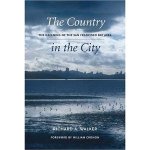
Professor Richard Walker of UC Berkeley, narrates the many stories of land preservation, saving the bay, and fighting toxics that have made the San Francisco Bay Area a global bastion of environmentalism.
Professor Walker is a professor of geography at UC Berkeley specializing in economics and geographic information systems. The Country in the City was published in 2007.
Posted in Upcoming Events |
Helping Our Most Famous Butterfly: the Mission Blue on Twin Peaks
Guest Speaker: Liam O’Brien
7:30pm, THURSDAY, SEPTEMBER 16th, 2010
In 2009 the Natural Areas Program of SF Rec & Park collaborated with US Fish and Wildlife to fulfill part of the 1976 recovery plan for the endangered Mission Blue butterfly. Leading SF lepidopterist Liam O’Brien, was invited to be part of the team to relocate and monitor 22 females from San Bruno Mountain. Since butterfly relocation is a recent science this evening promises glorious photography and stimulating conversation.
Posted in Upcoming Events |
The History and Prospects for the Western Pond Turtle
Guest Speaker: Matthew Bettelheim
7:30pm, THURSDAY, AUGUST 19th, 2010
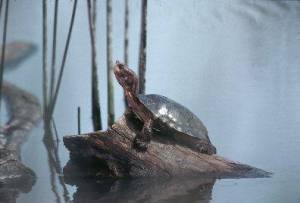
The Western Pond Turtle is San Francisco’s only native freshwater turtle. Wildlife biologist and natural historian Matthew Bettelheim takes us on a trip through time as seen from our struggling terrapin and the future of turtle conservation.
More about Matthew Bettelheim.
More about the western pond turtle.
Posted in Upcoming Events |
Twain’s Frog & the Beautiful Serpent
Guest Speakers: Brent Plater, Executive Director of the Wild Equity Institute
7:30pm, THURSDAY, JULY 15th, 2010
Come here the hopeful story about building a new unit of the GGNRA at Sharp Park, which is currently a SF-owned, money losing, endangered species-killing golf course in Pacifica.
You’ll learn how this exciting vision will save endangered species and build a better public park everyone can enjoy.
Brent Plater is a Fulbright Scholar, environmental law professor, and executive director of the Wild Equity Institute.
The Wild Equity Institute (WEI) is a team of experts in law, management, design, and education. WEI is working to accelerate the transition to a more equitable world through innovative education programs, nature-inspired design, science-based petitions, and vigorous enforcement of environmental laws.
Posted in Upcoming Events |
 Historic Watercourses of SF ~ Focus on the Wiggle & the Panhandle
Guest Speakers: Joel Pomerantz
7:30pm, Thursday, June 24th, 2010
Guest Speaker Joel Pomerantz gives us a tour of the the geology that shaped our city (and our bike rides!).
The Lower Haight once had lakes and streams. The valley had been the site of Spanish Mission trails and Ohlone trails before. Its zigzag of streets is known as the Wiggle by today’s bicyclists avoiding hills. Come glimpse the past and future of this fascinating urban valley with Joel Pomerantz, local geography researcher, founder of Thinkwalks.org and co-founder of the SF bicycle Coalition.
Posted in Upcoming Events |
 SF Natural History Series