Feeds:
Posts
Comments

Listen Carefully

http://www.nature.nps.gov/sound/data.cfmDan Dugan’s Nature Soundscape Lecture (July 18th) was the first time we’ve had a speaker in a couple hours before the talk began to set up. The auditorium was filled with a couple miles of cable, and a loud hissing as — he and a helper calibrated 4 speakers for our listening pleasure. And pleasure it was: a raven quorking its way through redwood trees, rocks crackling, mud bubbling, ice cracking, wind howling through palm trees, frogs croaking, 3 separate flocks of birds successively launching into the air, bats crinkling into the air from lava tubes, and the same bats humming back home later, coyotes singing, Lassen, an overflight of geese wings buzzing, elephant seals grunting and clucking through the sound of surf, the booms of spring ice falls in Yosemite, a chorus of jays in Muir lake, and the sounds of Mariposa Grove.

These were examples of geophony and biophony — sounds of the earth and the biosphere — terms introduced by Mr. Bernie Krause a local soundscape analyst. The importance of soundscape has only come to our attention in the last 25 years and how anthrophony — the sounds that we humans make — can impact ecologies. Our sounds reduce the amount that predators and prey, and mates and friends can hear.

The National Park Service established soundscapes as an official resource in 1999, and have been taking inventories, monitoring changes, and drawing up plans. 6 people in the National Sounds & Night Skies Office in Fort Collins run this effort – lending out gear for parks to monitor their soundscapes.

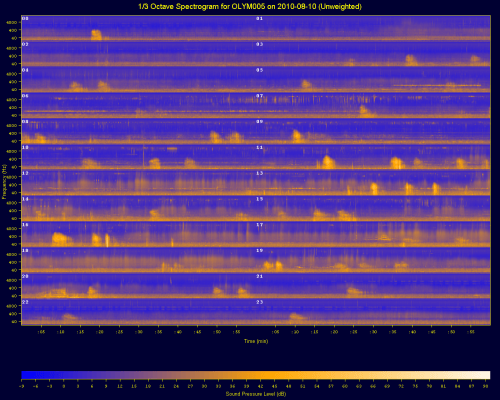
These monitoring  stations produce spectrograms that show sounds over the course of a day. From this all sorts of things can be picked out:  bugs, birds, the dawn chorus, and all the anthrophony: mostly aircraft — but you can tell helicopter, from jet, from prop plane. These become important in how Parks then manage overflights from private tourist companies, but also passenger jetways.  High altitude jets leave a sound “trail” 30 miles wide. This kind of monitoring has had some impact where in some places aircraft have been limited to certain altitudes, defined lanes, and only certain hours. There has now been discussion of making some parks no-fly zones.

Dan lead us through a lot of the techniques and tools by which his recordings were made. The types of microphones used for different things, the methods of capturing sound: mono, stereo, or surround, how our perception works with these different techniques, and the set up of all those things to effectively catch sound. Delivering these beautiful sounds though doesn’t stop with the recording — which is arduous in itself: hauling in the gear (he has lightweight gear for going further), getting up early to capture the sounds, finding the right place at the right time. It requires a good deal more work in the studio to polish those sounds up and combine recordings. (If you want to know more about this, I recommend signing up with the Nature Sounds Society for more info.)

He led us through a fun exercise looking at a sound spectrogram, and then hearing it — looking for the patterns of all that we were hearing (it was from a rainforest in Costa Rica — so there was a lot going on). The best part of the night was the fruition of all that work — listening with our eyes closed to the beautiful sounds around us.
July 18 – Bay Area Natural Soundscapes:
Guest Speaker: Dan Dugan
7:30pm, Thursday, July 18th, 2013
FREE at the Randall Museum, 199 Museum Way, San Francisco, CA 

Celebrate World Listening Day with a surround-sound tour presented by Dan Dugan, sound engineer. Learn about the theory of soundscape analysis and the parks’ struggles for soundscape preservation. There will be an opportunity to try on some bionic ears!

Sunset History

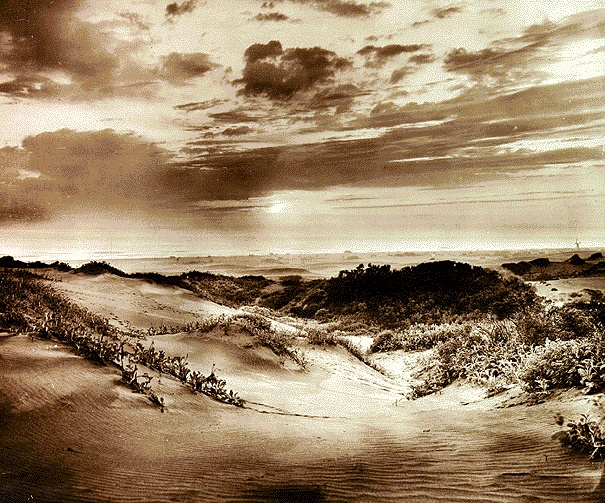
Outside Lands - Photo: Greg Gaar Collection


Photo: Greg Gaar Collection (approximately 1900 — note the windmill in the upper right)

We San Franciscans can be a bit dismissive of the Sunset (and the Richmond) where Golden Gate Park is not involved. Lorri Ungaretti gave the truth of it in her lecture on June 20, 2013: Stories in the Sand.

Before it became to be known as the Sunset, the area was known as the Great Sandbank, and the Outside Lands. It was sand and more sand, dunes, and dunes covered with vegetation. Think of the area just north of Monterey and Seaside, Sand City, and imagine that stretching a good deal further.

It wasn’t part of the city until 1866, when the land was granted to the city after a supreme court decision. The quickly growing city had started to think about development. After the land was granted, the city quickly started to draw up plans. From the beginning, plans for a great park were decided upon, and 4 years later, they began work — the first efforts to smooth out the dunes of the sunset.

The midwinter fair of 1894 was a big deal in the development of the area.  Bringing both public transit and public attention towards these empty lands. Development was slow at first, Carl Larsen owned a lot of the land, including a chicken ranch.

Old horse drawn streetcars were dumped out by the beach, and these became known as Carville by the sea, as first people used them as clubhouses, then as homes, increasingly elaborate ones, as people stacked them, and made courtyards. Eventually there was a hotel and a church. By teens and 20s they were falling apart, as people began to build more permanent homes. By then the area was known as ocean side.

The first developer was Parkside, who began laying out roads, and bringing out more public transit. Other builders started to move in, R.F. Galli, Oliver Rosseau, and the biggest of all Henry Doelger (aka, per Herb Kane: the last builder of affordable housing, one nail henry). The 20s and 30s saw the dunes disappear under the development. The sand did not totally disappear though — the pioneers (as Lorri referred to them) had a to deal with blowing sand that made gardening difficult, and leaving your car outside a danger.

Of course, things were not perfect — all these developers were intent on keeping Asian-Americans, and African-Americans out of these developments. These policies were not successfully challenged until the 60s (Willie Brown was the origin of one protest after he was not allowed in to view a property), when the Prop 14, the Fair Housing Act (which was protective of these racist policies) was ruled unconstitutional by the US Supreme Court.

Lorri profiled a few notable people who helped shape the neighborhood: the chicken farmer Carl Larsen who originally owned much of the land, Ray Schiller — “the mayor of Parkside” — a neighborhood activist and community organizer,  Josephine & Audley Cole — Josephine was the first African-American teacher in SF public schools, and Audley the first African-American MUNI driver, and the professional tennis player and WWII spy, Alice Marble.

There’s plenty of more to learn. Check out Lorri’s books, and numerous articles. Check out her website for a full list of books and articles.

Michael McGowan spoke before the Natural History crowd on May 16, 2013 about his thinking and philosophy around invasive species in the San Francisco Bay.

Our current attitudes to managing invasive species come from Charles Sutherland Elton who brought this sub-discipline into being after the Second World War. He recommended quarantine, eradication, and controls to suppress invasive species. The chief goal of which was to prevent extinction of native species and a homogenization of the local ecosystem.

There are many examples of where invasive species have wrought havoc on local ecosystems. Many of these examples involve islands, where species diversity is already low. And there are places like Australia where there are many examples of introduced species gone wrong.

What can we say about the Bay, in this regard? There are any number of invasive species: striped bass, oyster drills, mitten crabs, clams, cord grass, various copepods, and a mud shrimp species that Michael only recently discovered. These have been introduced intentionally, and unintentionally and have all in some degree affected SF Bay, at the same time there have been changes wrought to the environment by man through other means: run-off from gold mining, the filling in of wetlands, the run-off from our growing towns and cities, ship traffic, damming and altering of rivers, climate change, etc.

One question then is how much harm have these invasive species brought to the bay? Of the species Michael went through, the Corbula clam may have had the greatest affect altering the processes of the North Bay, but there has been no species extinctions as a result of these species, and no homogenization of Bay diversity. In fact, one could say that the diversity of the Bay has increased, that there’s been some net gain.

That isn’t to say we shouldn’t try to preserve & protect native species, or introduce new species willy-nilly, or not worry about things like ballast water (the standard practice these days is for ships to exchange ballast water offshore where travelling species won’t be released into more protected waters). Michael stressed the importance of good data and monitoring over time to work towards understanding these complex systems on top of which we are living.

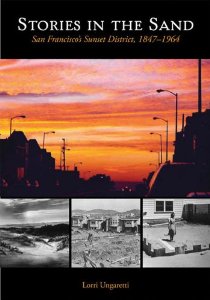
stories

Stories in the Sand
Guest Speaker: Lorri Ungaretti
7:30pm, Thursday, June 20th, 2013
FREE at the Randall Museum, 199 Museum Way, San Francisco, CA 

Author Lorri Ungaretti will guide us through the quick development of the Sunset District from “inaccessible” sand dunes to a city suburb. Her talk is based on her book: Stories in the Sand: San Francisco’s Sunset District, 1847-1964.

You can find more about the book, and some more about what we might be learning in this article on SFGate.com.

Great Blue Herons at Crissy Field

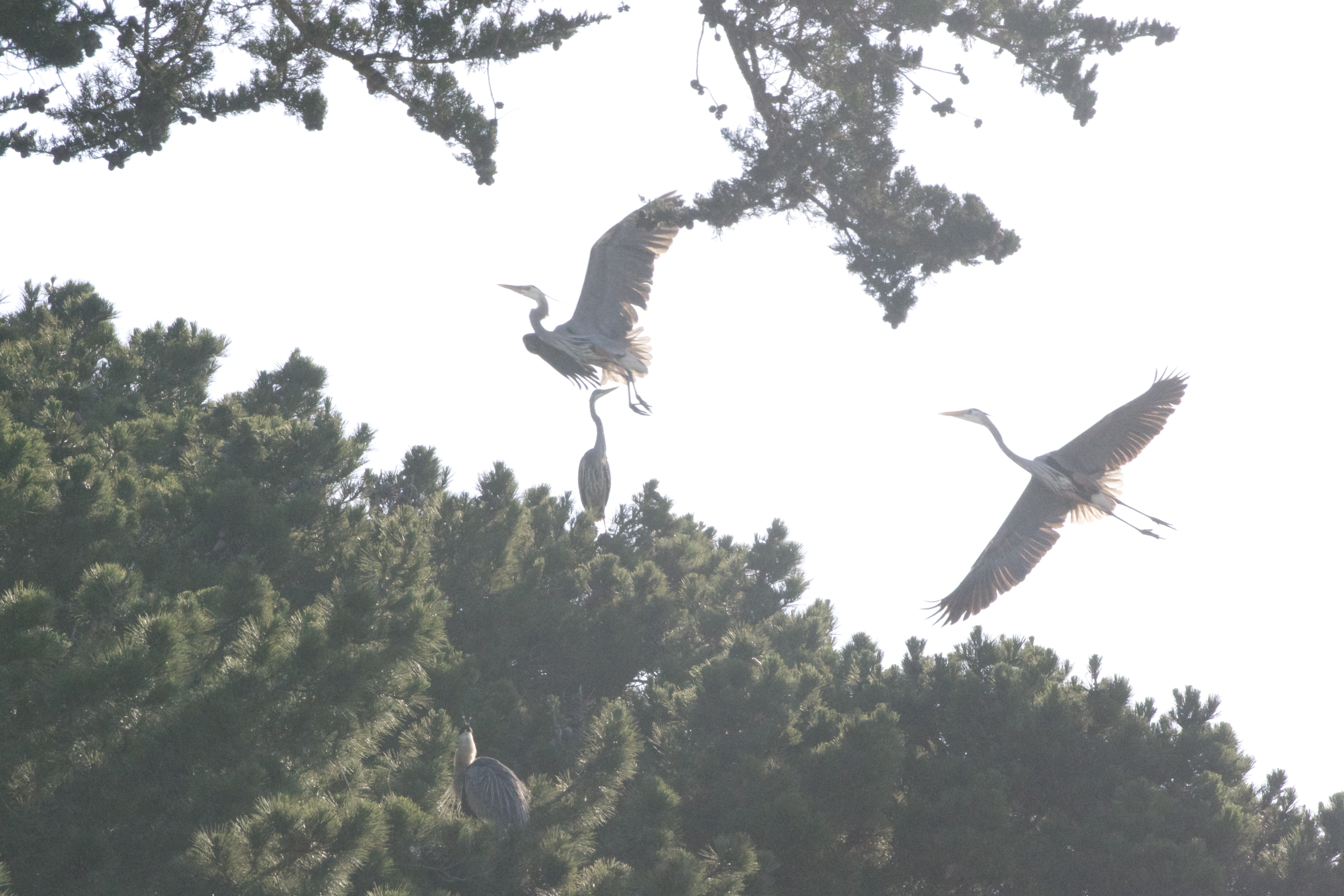
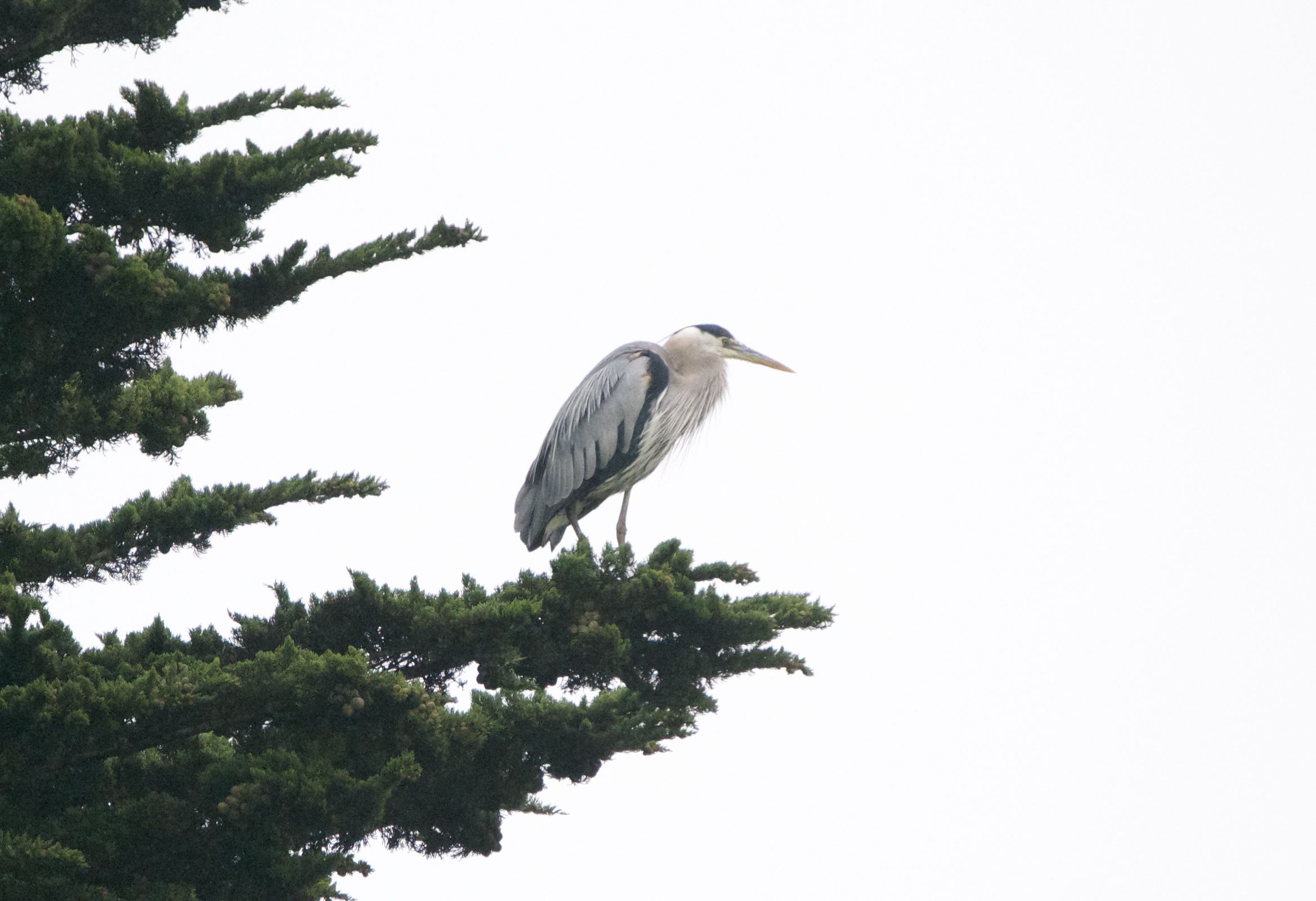
20 years ago, Nancy DeStefanis, was at Stow Lake and was lucky enough (although one imagines a keen eye probably helped) to find Great Blue Herons nesting at Stow Lake — the first Great Blue Herons recorded as being seen in the city in fact. Every since, then she has been following these big beautiful birds as they come to breed, nest, and rear their young. The pictures she presented at our lecture on April 18th, 2013, presented a shorthand version of their lives in and around the nest. (Forgive me if I get some of the details wrong — I was running the slideshow and not able to take notes.)

The males arrive first as a Christmas nest, looking to stake a claim on the nests left behind from previous years, waiting for the arrival of their mates. When the females arrive nest building starts, the males presenting sticks to be added to the ever growing nests. This leads into the courtship, and eventually mating. The eggs are small, only slightly bigger than chickens eggs, but the nestlings that hatch quickly begin to grow. The mother and father bring food to the nest, but don’t necessarily feed the chicks through regurgitation.

Great Blue Herons not only snack upon fish, they also hunt gophers and other rodents that populate our parks. Not much preys upon Great Blue Herons in turn although Great Horned Owls have been known to hunt them at times. There are 4 nests currently being used on the tree, but there is about 6 total. The most prized on is near the top of the tree, of enormous size as it has just been added to over the years. One nest fell off the tree at one point — which has since ended up at Audubon Canyon Ranch.

The young herons sitting in the nest are wonderfully silly to behold sporting black mohawks that get tossed about in the end. The birds quickly grow though and it is only some weeks before they are nearly as tall as their parents and are stretching their wings, and beginning to hop from branch to branch.

After the birds fledge, the birds go they own way. The juvenile young herons at this point are on their own. Parents don’t teach the young. Their survival rate is very low. 67% don’t make it past their first year.

You have a couple more weeks to be able to see the birds with the aide of Nancy and her crack crew of volunteers and great spotting scopes. At 1030am she walks her guest around (young kids are free, adults are $10) the lake and over to the Strawberry hill, looking at not only the herons, but with an eye for the other nests and species that inhabit the park. It’s well worth a trip — head over to the Stow Lake boathouse, and look for Great Blue Heron signs.

Rethinking Invasive Species in San Francisco Bay
Guest Speaker: Michael McGowan
7:30pm, Thursday, May 16th, 2013
FREE at the Randall Museum, 199 Museum Way, San Francisco, CA 

Could a new non-native mud shrimp be good for the sub-tidal ecosystem? Michael McGowan, fisheries oceanographer and aquatic ecologist, will discuss how an invasive species may actually be beneficial.

Michael was a guest speaker last year speaking on Sturgeon. He is a restoration ecologist with 20 years experience in research, teaching, and community-based ecological restoration. He has monitored the impacts of dredge spoil disposal, assessed potential impacts to fishes of runway expansion into the bay, analyzed data on spread of invasive wetlands plants, and evaluated the habitat benefits of native oyster restoration.

Underfoot

As you walk about the hills of San Francisco, you can consider many things: the blue sky, the fog rolling in, the birds tweeting about you, a beautiful building, a tree, a garden, the fabulous inhabitants. Even living in earthquake country, it is easy to think of the ground under our feet as something immutable. Dr. Jean DeMouthe, Senior Collection Manager at the California Academy of Sciences, on March 21st, 2013, brought us around to thinking about what and how the rocks of San Francisco came to be under our feet.

Fifteen thousand years ago, one could walk to the Farallones Islands, the golden gate a river . 125,000 years ago, San Francisco was an island, Lake Merced a remnant of the Colma Straight. The rocks of those days were “forged” much much earlier as the pacific plate crashed into the north america plate, subducting under it, and giving rise the the volcanoes in the (now) east bay and to the north. Out of that, and the movement of plates came our main rocks: serpentenite, chert, and sandstone. Our serpentenite (not as nice looking as in other areas of the world) is a metamorphic rock formed under heat and pressurel; chert is remnants of biological activity — shells of radalarians that accumulated on the sea floor, and buried, and under pressure solidifies the silica in the shells recrystallizing, separated by layers of clay and siltstone; our sandstone is graywacke, the weathered remains of volcanoes washed out to sea. The latter two, laying as they did on ocean floors, owe their place in our hills due to the movement of earth.

Today the subduction is done, the plates now moving in opposite directions (there’s still subduction going on in the Pacific Northwest part of the “ring of fire” around the Pacific). But those rocks are now with us (at least for our short stay on this world) and help give rise to the unique landscape of our city. Serpentenite, for instance, is detrimental to most plants, it is poor in calcium and magnesium, the opposite of what most plants need to thrive, but of course evolution comes in to play and there are plenty of endemic species that survived the harsh climate and adapted to the conditions.

Not much of our rock was particularly good for buildings, (like our wood presumably) a lot of that rock came other places where there was volcanic rock to be had like from Marin. In other places, serpentinite might have been used as a decorative piece, but ours is not as pretty as some.

Our city is dotted with little rocky outcroppings, along the shore, at the tops of many of our hills. You can see the layers thrust up and out by the movement of the earth. If you look closely and in the right places, you might see the remains of other processes, rare materials, and fossils (be warned that it is not longer legal to take, so just look!).

Celebrate the 20th Anniversary of the Great Blue Heron Colony in GG Park
Guest Speaker: Nancy DeStefanis
7:30pm, Thursday, April 18th, 2012
FREE at the Randall Museum, 199 Museum Way, San Francisco, CA 

Nancy DeStefanis, Director of SF Nature Education, will speak on the 20th Anniversary of the first nesting pair of the Great Blue Herons at Stow Lake in GG Park. DeStefanis discovered the first nest in 1993, and has monitored and studied the behaviors of the herons since then.

heron


 San Francisco Under your Feet
Guest Speaker: Jean DeMouthe
7:30pm, Thursday, March 21st, 2012
FREE at the Randall Museum, 199 Museum Way, San Francisco, CA 

Geologist Jean DeMouthe, will take us through our local geologic history. We start with the big picture beginning in the Mesozoic Era (Dinosaurs) and end with what lies under our city today. Local rock types and fossils will be illustrated and discussed.

Dr. DeMouthe is a geologist in the department of Invertebrate Zoology and Geology of the California Academy of Sciences.

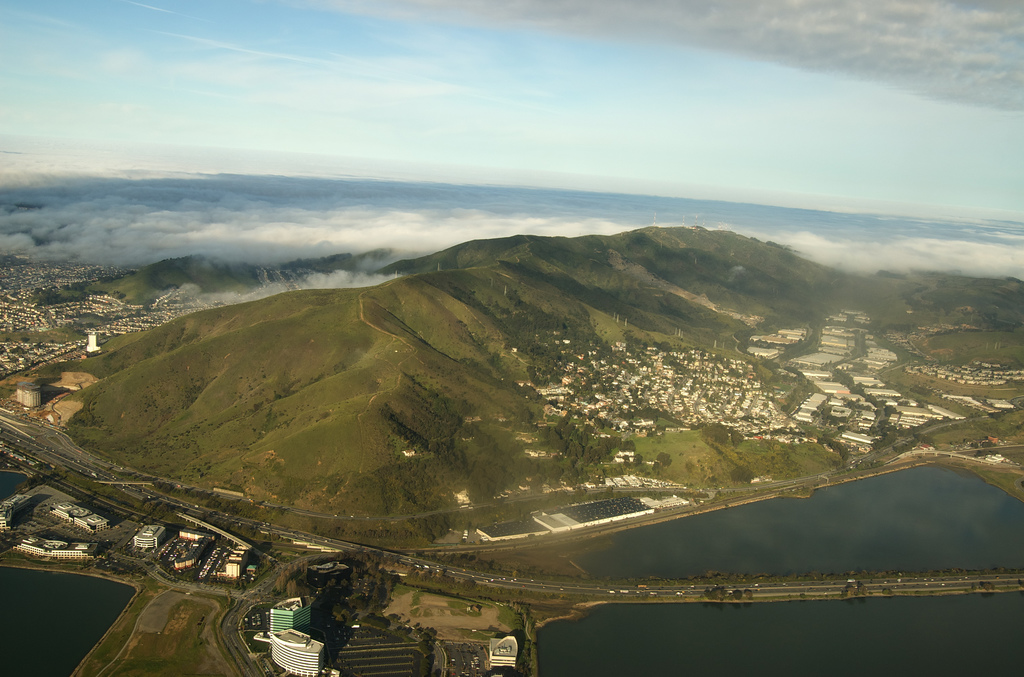
Rocks underfoot on Candlestick Hill