Feeds:
Posts
Comments

Around the Bay: Man-Made Sites of Interest in the San Francisco Bay Region published by the Center for Land Use Interpretation is a fascinating trip around the edge of the San Francisco Bay. I’ve lived in the bay area for 16 years and knew about a good number of them in the South Bay in particular — but the farther I travelled through this book the more interesting it became.

Not that it is entirely comforting: the number of landfills, chemical plants, explosive plants that we built at the edge of the water — where no doubt things were dumped, poured, and leached into the bay for ages before there was any protection — is entirely depressing. Many of these things have made some transition to offices and parks, others remain with contaminated dirt or like the Selby Works Site have a enormous asphalt slab to cap the contamination that lies beneath.

Still it is a fascinating glimpse at the history of this enormous place — from the eye of naturalist, I might have wanted to see more about the natural history of these places — but that is clearly not the goal of the book.

The only real criticism I’d have is I would have loved to see an inset map for each location. Even though I am fairly familiar with the shape of the bay, and the direction of the circuit is obvious — it would be good to know where exactly each thing was — and what might have been passed over as you travel around.

Even more ambitious perhaps, it would be cool to see a link to more information online, where more information and historical photographs might be examined.

All in all though, if your a fan of San Francisco Bay this book is well worth having around as a reference and resource.

Find the book on Amazon — Around the Bay: Man-Made Sites of Interest in the San Francisco Bay Region (The Center for Land Use Interpretation American Regional Landscape Series)

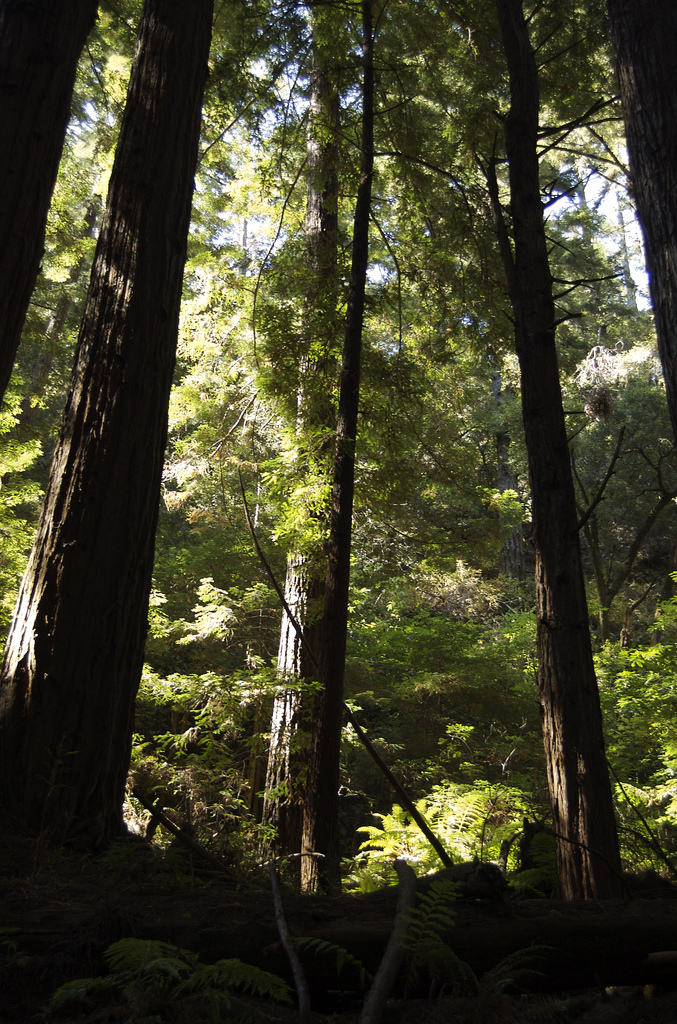
Fog and the Future of Redwoods
Guest Speaker: Emily Burns
7:30pm, Thursday, Jan 23rd, 2014
FREE at the Randall Museum, 199 Museum Way, San Francisco, CA 

Redwood ecologist Emily Burns will describe how climate change is affecting the growth of our ancient redwood forests. From less fog to warmer weather, see how the tallest and largest trees on Earth are responding to today’s novel climate.

Redwoods

Filmmaker Lance Milbrand — who spoke with us on November 21st, 2013, has some pretty amazing footage: newts paddling through a stream, hanging from twigs, laying eggs, newt eggs hatching. Some of this is in some part due to the amazing technology we have on hand to film, but to a larger degree it comes from Lance’s patience and persistence — laying still in a cold stream in a dry suit, camera at the ready, working to get the shot he wanted.

He showed three films that night — one about a recent trip to yellowstone, with bears, rutting elks (the more dangerous beast), a hunting coyote, and a beautiful landscape; two films about newts — a children’s music video (see end of post) and a portion of a longer piece about the newt lifecycle.

The patience and persistence doesn’t necessarily end at the camera — there’s is also editing, and of course distribution. We hope that Lance finds a way to finish this great little educational film about these strange little creatures, our neighbors here in the San Francisco Bay area.

You can find more about Lance and his films on his website: milbrandcinema.com

I’ve always loved the story of Agassi and the fish, where a prospective student of his has his powers of observations tested by a dead and rotting fish.

Having been an avid observer of birds of over the years, I was blown away by the amount of what I did not know about birds. David Lukas’ lecture explored the bird from the inside out, exposing a lot of the critical tweaks of evolution that allows it to do its most arguably bird-like activity: fly.

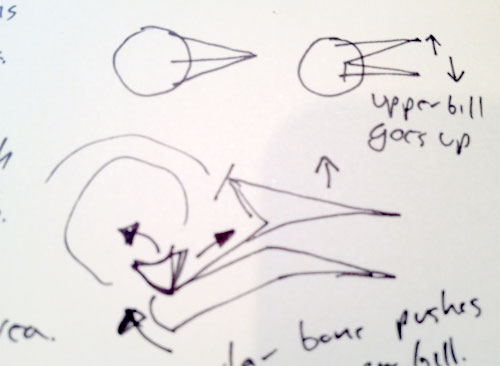
bird bill mechanics

With a overhead projector, transparencies, and a dry erase pen, David lead us on this exploration — starting from what we in the audience knew of what makes a bird a bird. A lot of what has driven bird evolution is around the ability to fly: reducing weight, balance, and increasing power.

Power is most obvious in its muscles — a birds breasts muscles are around 30% of the birds overall weight.

Reducing weight has led to hollow bones, a lack of teeth, gizzards in the middle of the body at the bird’s pivot point where their food is ground up. They have a fast metabolism which processes food in 15 minutes, and dispose of waste as uric acid which doesn’t require a bladder.

The bird jaw and feet have mechanical mechanisms for serving the bird’s needs. In opening the beak — the upper beak is pushed open when the lower beak is pulled down. This limits the number of muscles needed for the bird because muscles = weight. The action of sitting, folding the legs, curls the toes of the bird — this is what allows the bird to sit overnight on a branch without sweating it. Some raptors take advantage of this when they take down prey, they’ll land and seem to smother their prey — what their doing is taking advantage of this mechanical action to add a killing below to their strike, closing their talons just in the act of landing.

The ribs — which are small jointed fragile bones — act as a bellows for the bird, pumping air through the body. Some of the birds hollow bones (which in general are not all that fragile) also play a part in the bird’s respiratory system, helping in the transport of the air between throat, air sacs (front and back), and then out again. This one way path of the air also helps in keeping the bird cool (birds run hot!), acting as a heat exchange throughout the body. Everything is built for maximum efficiency.

Wings and feathers are whole other pack of fascinating details from the way feathers grow and overlap and have different functions: down for insulation, feathers for flight (and also a degree of waterproofing with their overlapping and interlocking barbs and barbules), and little filoplumes sticking out through the other layers of feathers to provide some additional sensory inputs to the bird. David have the image of someone dressed in a down coat with a Gortex jacket worn on top — they would not otherwise be able to feel the air.

A surprising little detail of feathers though is that feathers appear in groups, with most on the head. The body itself is mostly bald with feathers combed over to cover it.

There seemed to be no end to the surprises from their huge eyeballs, to their tips of their tails, all these little details that make birds what they are — another lesson in how little I know about the world, and how fun it is to learn.

You can find out more about David Lukas, his books, and upcoming presentations on his website lukasguides.com.

World of the California Newt
Guest Speaker: Lance Milbrand
7:30pm, Thursday, Nov 21st, 2013
FREE at the Randall Museum, 199 Museum Way, San Francisco, CA 

Filmmaker Lance Milbrand will preview his video-in-progress encompassing all things a newt may see and experience in its twenty-year lifespan. Filmed entirely in the Santa Cruz mountains.

More information at his site: http://milbrandcinema.com or watch a trailer on Vimeo.

Perry Matlock joined us on Sep 19th to talk about Ancient Monuments and Funerary Places in the San Francisco Bay.

When the word “shellmound” comes to mind, the first picture in your head is probably that of a garbage pile, a midden heap, a pile of refuse, or dinner table scraps – a big pile of empty discarded shells. This is the remnants of the dismissive thoughts of the archeologists who first looked at them.

There are other things in the shellmounds: fish remains, bones & scales, charcoal residue, which might add to that picture. But the significant find is that the mounds often contain human remains. With that simple fact, we might thing of them quite differently not as a pile but a place – burial mounds, sacred places, akin to hallowed places round the world: the geomorphs, mounds, earthworks, and stones that are quite often protected and preserved with maps and guidebooks pointing them out.

Now the numerous shellsmounds that could once be found all over the Bay Area (425 according to one 1909 map) are almost all gone. Some of the mounds, like the one in present day Emeryville were huge, thousands of years old – likely landmarks. Most of them have now been destroyed dug up, bulldozed, sometimes dynamited used for roads or tennis courts, garden beds, or just to get them out of the way.

It was only with the dismantling of the Emeryville shellmound that the issue of the dead came to the forefront. Local Native Americans and allies did their best to bring the issue to the forefront. They lost that particular battle (Emeryville has a little homage to the mound, which can’t really in any way make up for it) but it brought together the right people to start saving those mounds that were still left.

There is still some mystery as to what larger purpose these mounds had, how exactly they were used and played a part in everyday life. One interesting note is that Coastal languages done’t have a word for shellmound — or possibly just not telling it to anyone. Whatever we know or don’t know the local tribes consider these places sacred — which really should be enough.

If you are interested in learning more one place to check out is the Oakland Museum of California – their new exhibit on the Bay (Above and Below) has a section on Ohlone life prior to the Spanish.

I will add links to additional resources and books that Perry mentioned in his talk to the website. Perry was not speaking as a representative of any tribe, but only for himself having been involved and volunteering on these issues for many many years.


Bird Feathers and Bird Bones
Guest Speaker: David Lukas
7:30pm, Thursday, Oct 17th, 2013
FREE at the Randall Museum, 199 Museum Way, San Francisco, CA 

David Lukas, writer and naturalist, will cover bird bones, feathers, and muscles and how they work together to help a bird fly and live in its environment. Expect to learn about the inner and outer workings of birds.

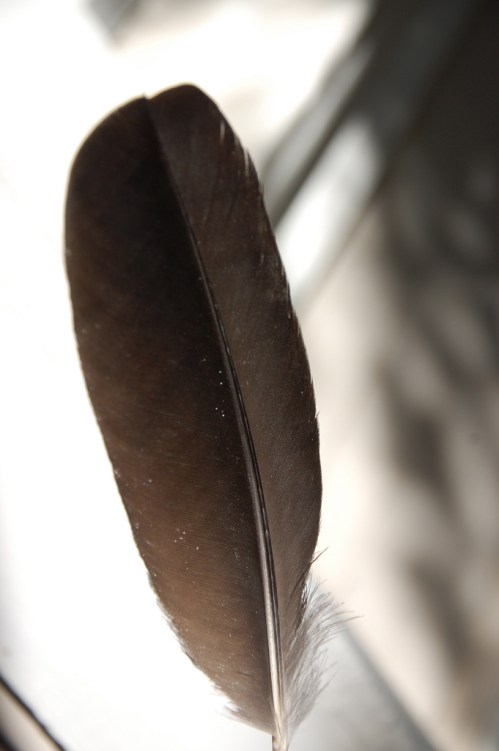
raven feather

Mountain Lake

The last 60-70 years have not seen Mountain Lake in the Presidio treated well. When the Spanish came across it in 1776,  Father Pedro Font wrote:

“This place and its vicinity has abundant pasturage, plenty of firewood, and fine water, all good advantages for establishing here the presidio or fort which is planned. Here and near the lake there are yerba buena and so many lilies that I almost had them within my tent.”

The lake changed most drastically when Highway 1 (Park Presidio) was put laid in. Sediment from the tunnel through the Presidio was dumped into the lake, and drains from the highway, sent oil and gas directly from the road into the lake. Once 20′ deep, its depth was lowered to only now 9′ at its maximum, and became slowly but surely full of lead.

Add to that the acid and tannins from leaves from the abundantly planted  Eucalyptus trees, all sorts of odds and ends (including a carriage according to one member of the audience), and all sorts of turtles, frogs, fish and other critters (including in 1996, a Cayman alligator), the lake has changed dramatically from when Father Pedro found it.

Much of the talk about restoring the lake started when the lead was first noticed by a scientist in the 90s (and later affirmed by various agencies). People also were worried about the increasing murkiness of the lake.

Two efforts are being made to restore the lake: one is to get rid of the lead, and at least some of the sediment that was dumped there. This involves filtering sludge vacuumed up from the bottom and pumped up into bags which will are being taken to a landfill. This will also remove some of the accumulated leaf litter. Some of the eucalyptus is also being removed to reduce the amount of impact they have on the lake (many trees remain near the lake as part of a “historical forest”).

The other effort is to try and restore the lake back to more like what it once was. This involves two fairly difficult task: one is to remove the invasive species and relocate them to other places where they will not have the same impact. Already about 40 fish (carp, bass, and a couple sturgeon) and 17,000 juveniles have been removed, as well as numerous turtles. In case you are worried, these have been taken elsewhere to live out there lives — the fish to a private lake, the reptiles to Sonoma County Reptile Rescue.

The other, perhaps most complicated task is to restore native species back in the lake. This is not just animals but also plants. One group of people will be setting up a set of compatible plants species, the others will focus on bringing into the pond species that will, should, and can thrive. This is complicated not only be the problems of individual species, but also the status of endangered species and how they can be treated. Another factor — at least where amphibians is concerned is the Chytrid fungus that is having a devastating effect on many amphibian species.

It is a long term effort that will require vigilance, testing, and monitoring to make maintain the appropriate balance The depth can’t be restored to it’s prior depth because of the risk to the roadway , so pumps are also going to be utilized at least until some of the plant communities take hold.

It’s a little bit akin to a gigantic aquarium project, where you’ve had to start out with a filthy tank full of species that you are not particularly interested in.

Why go through all this work to try and re-establish this ecology? To preserve and protect biodiversity — and all the ecological functions and stability that biodiversity can provide; to test the theories and experiment with introduction frameworks of how these restorations actually happen; and last but not least to provide environmental education — engaging the local community, to bring an awareness of our urban ecology and how we interact with nature in a city, and to be a living museum for all these marvelous creatures.

Ancient Monuments and Funerary Places in the San Francisco Bay
Guest Speaker: Perry Matlock
7:30pm, Thursday, Sep 19th, 2013
FREE at the Randall Museum, 199 Museum Way, San Francisco, CA 

Perry Matlock, archivist for the Sacred Sites Preservation & Rights of Indigenous Tribes, will talk about the shellmounds and the people who made them.

photo by Sunil Veluvali

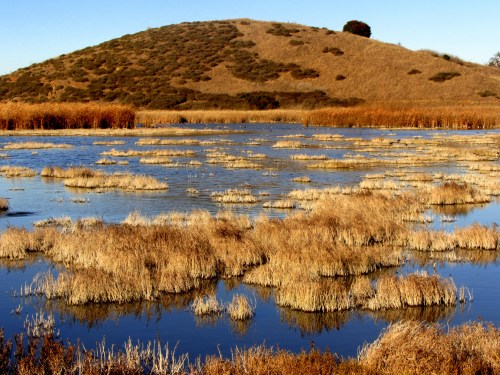
photo by Sunil Veluvali of the Coyote Hills — site of some archeological sites.

Past, Present, & Future of Presidio’s Mountain Lake
Guest Speaker: Jonathan Young & Brian Hildebidle
7:30pm, Thursday, August 15th, 2013
FREE at the Randall Museum, 199 Museum Way, San Francisco, CA 

Jonathan Young & Brian Hildebidle will talk about the historic/cultural aspects as well as the current aquatic ecological remediation and restoration project.

For some more background information, check out this news report.

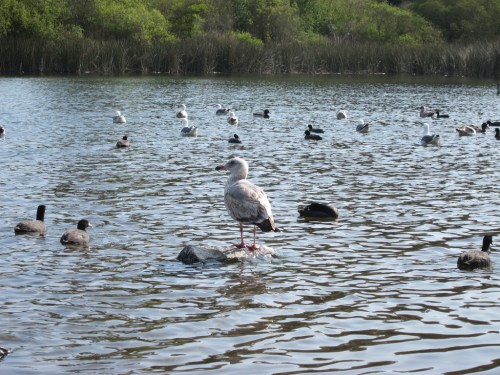
Mountain Lake

Photo By Eugene Kim