Feeds:
Posts
Comments

Glenn Lym has released the video that covers the same ground as his lecture on June 21st.

You can subscribe and download this video and its companions through the free iTunes Video Podcast Store.

You can also view the video streaming on Glenn’s website.

Wild Foods Foraging, the Good, the Bad, and The Ugly
Guest Speaker: Jonah Raskin
7:30pm, Thursday, August 16th, 2012
FREE at the Randall Museum, 199 Museum Way, San Francisco, CA 

Foraging is making a comeback, with ever more people eager to find food in the wild. But with a growing population and diminishing natural resources, is it a sustainable practice? Jonah Raskin, author of books and articles about food, farming, and agriculture, will address this issue.

Jonah Raskin is the author of 14 books, including most recently, “Field Days: A Year of Farming, Eating, and Drinking Wine in California” and “Marijuanaland: Dispatches from an American War.” He has written about the ethics of foraging for Bay Nature.

You can read more about this in a Bay Nature article from Apr/June of 2012: The Forager’s Dilemma.

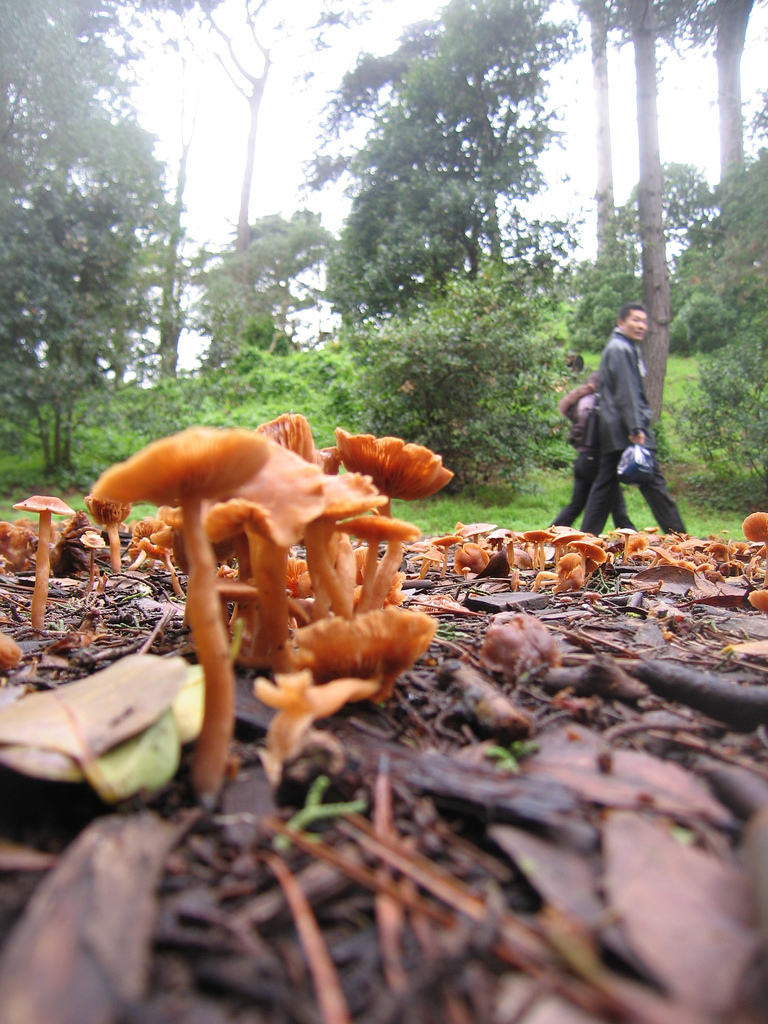
I don't know if these mushroom as editable at all, but they looked delicious.

“Commuturalism” I’ll define as using ones commute as a time to practice being a naturalist – to paying attention to the nature I find on my commute. I’m lucky to live in a city where I have a job to which I can bike or walk.

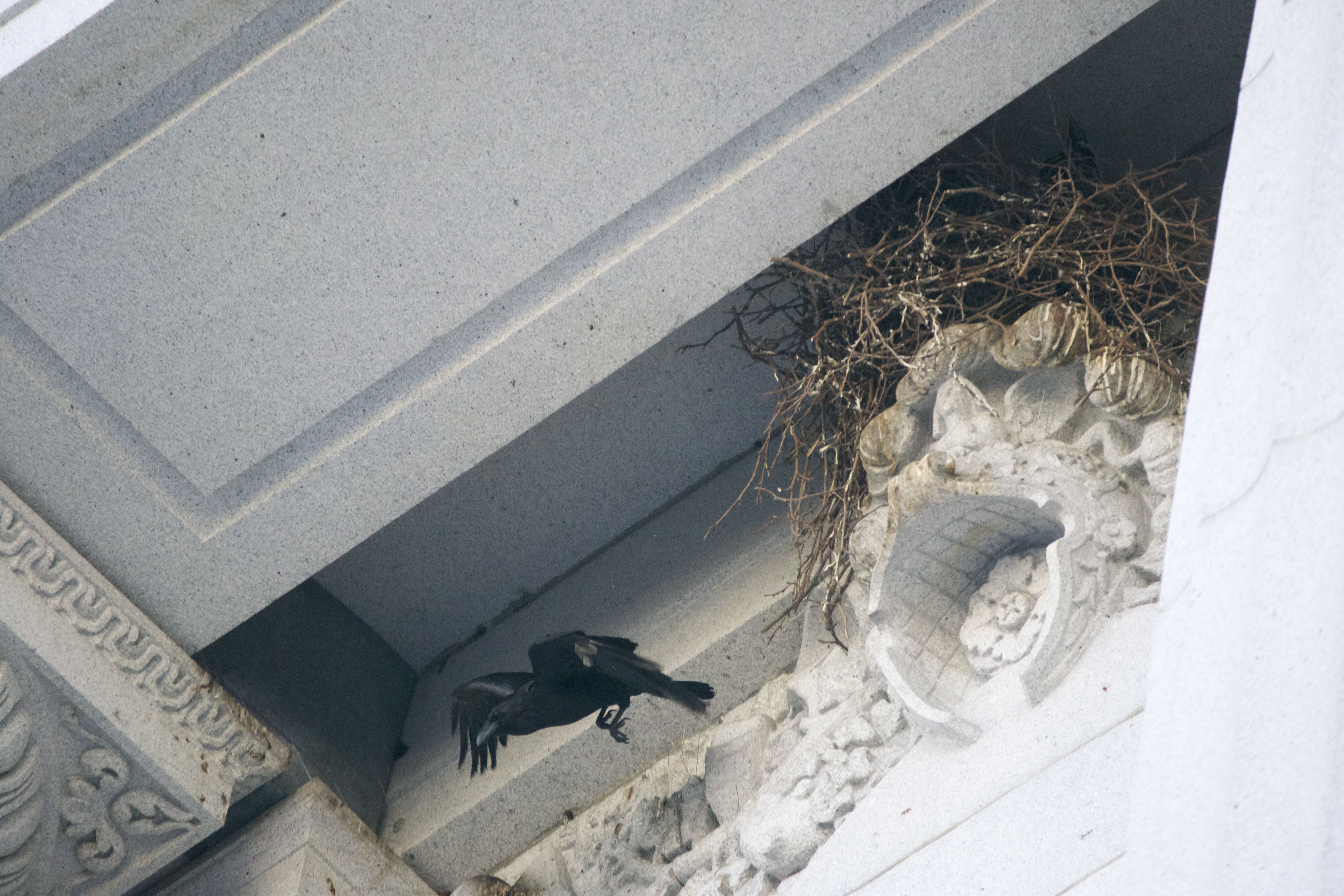
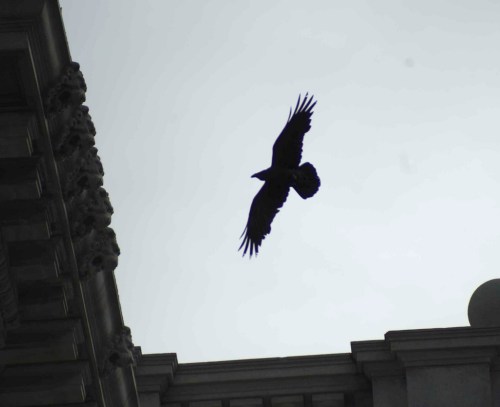
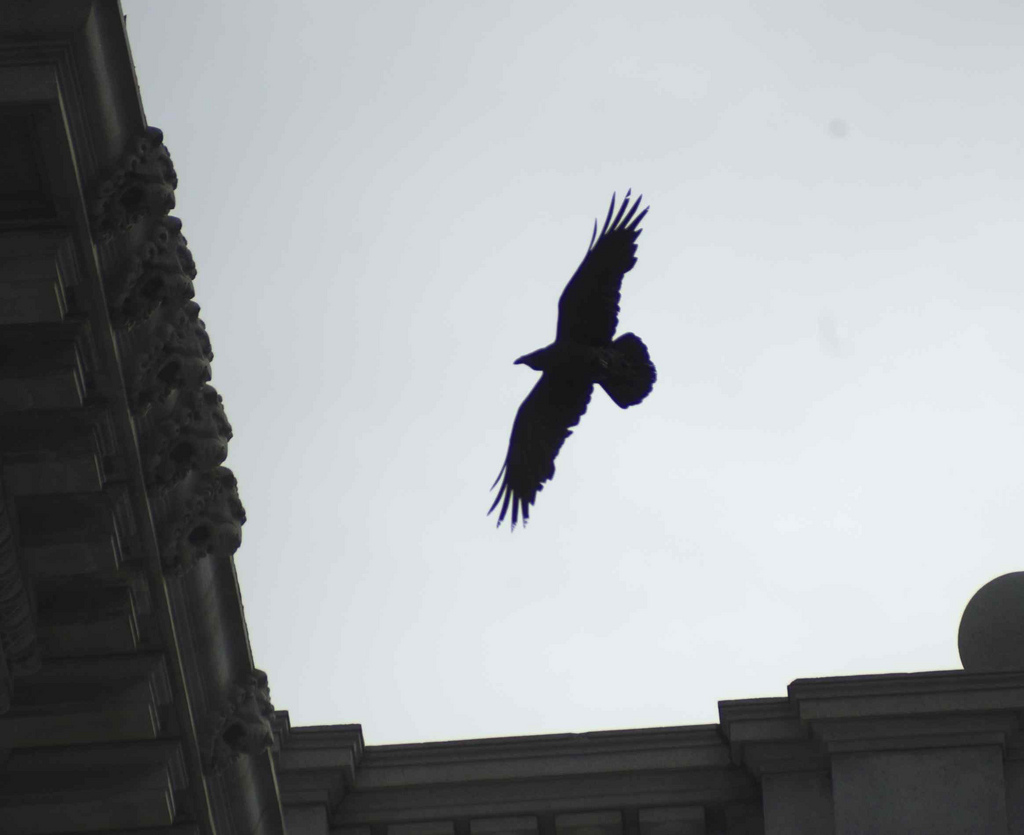
My interest in ravens started in earnest a few years ago. I stopped to watch a raven flying at 7th and Mission above the plaza of the new federal building. It was a beautiful thing. What really got my attention though was when it flew into a nest high up on a federal courthouse.

For the next couple months, I stopped by nearly every day to watch the progress of a raven pair, bringing up 4 nestlings into the world. After they’d flown, I started to pay more attention, and as the year passed I started to write things down, and started to ask questions. The first most obvious question: would they come back?

The other thing that kept me going, was something I’ve learned over time at all these other lectures I’ve come to, and had a hand in arranging (full props to Philip Gerrie for that task). That is how often a question comes up to which the lecturer doesn’t know the answer. And as I started to read about ravens, I felt there were plenty of gaps, plenty of things that all these information sources didn’t talk about.

And those ravens did come back, until they were driven off by crows. Which lead to more questions, and the need for me to actually be able to differentiate the two. I began altering my commuting route, and eventually found another pair of ravens, and then a couple more.

This year, I found 11 active nests mostly on the north eastern side of the city, with a couple outliers in the south. 6 of these nests were on trees, 1 was on a ship, 1 was on a sign, 3 were on buildings, and one was on a bridge.

In the lecture, I talked about the history of ravens in general, their distribution, and their distribution and numbers here in San Francisco.

I spent a good portion of the lecture going over the difficulties of identifying a raven and a crow. Ravens are bigger, have massive beaks, longer wings, a wedge shaped tail that’s more ragged when straight. However all these clues can be meaningless when the bird is not that far away.

There are other clues: behavioral – ravens fly higher and will ride thermals , crows tend to nest with some helpers, raven nests are more visible. I’ve found the easiest way to find a raven, and sometimes the only sure way to know, is by sound. Ravens have a much more varied sound range, and calls that are distinct from crows.

I spent the last third of the lecture going through the lives of the ravens I’ve met, talking about how they nest, the odd choices they seem to sometimes make, the difficulties that the parents and nestlings have. I spoke on what they eat, where they sleep, and how they raise their fledglings.

We ended the talk with talking about some of the problems ravens cause putting more pressure on populations of ground nesting birds in particular – the snowy plover chief among them. Ravens are here in numbers now because ultimately we leave a lot of food around for them, but as smart, opportunistic creatures, that is not the only thing they’ll eat.

I suggested at the end of the lecture that what we need is better data, in particular about their overall numbers, and their habits through the city: how the flocks move, to where, and when.

If your interested in helping out, or if you have any information about raven nests, or roost locations, please drop me an email at acotter@nonsensical.com.

If you have your own SF raven stories to share, you can send them to me by email, or share them in the comments below. I’ll hopefully be making a slightly simpler guide to identifying crows and ravens, with a better intro to how they sound. In the meantime:

Here are the  slides from my lecture. (slightly edited from the night of the lecture)

P.S. Thanks again my colleague Philip for trusting enough to let me speak, and thanks to my wife for putting up with my strange outings, and capacity to stop dead in the street to listen to birds.
City Hall Raven Nest

San Francisco’s Thriving Ravens
Guest Speaker: Adrian Cotter
7:30pm, Thursday, July 19th, 2012
FREE at the Randall Museum, 199 Museum Way, San Francisco, CA 

Adrian Cotter started observing common ravens (corvus corax) after unexpectedly coming across a nest on a federal courthouse a few years ago. Since then, he’s sought them out and observed them in great roosts from San Bruno mountain to the Golden Gate, and watched them rear their young on trees and buildings around the city.

He’s come to understand some of the challenges that they face and the ones that they create for us, while getting a better understanding of the ebb and flow of their lives: when and where they nest, how densely they nest, where the juveniles hang out, where do they sleep, how they deal with crows, hawks, and other birds, and more…

Come learn more about the lives of our local resident ravens — and learn to tell a crow from raven.

When Glenn Lym first moved to SOMA, as an architect he quickly noticed that things were a little out of whack. Buildings tilted here, streets cracked there – nothing was straight. As he began to look into it, what unfolded was a story of how downtown San Francisco was changed from a field of dunes to a street gridded flatland.

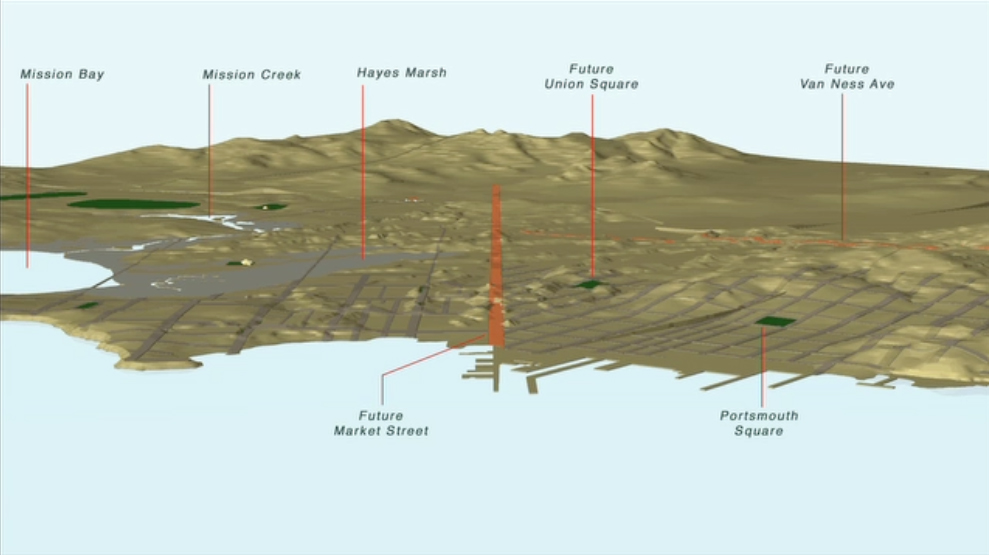
Of course, that’s hard to imagine these days. It’s hard to think that our Market street — along more or less flat straight shot to the wharf — was a non-obvious even audacious idea. The truth is that downtown was the last stop of the sands being blown across the peninsula. To make the gridded streets we have today, road builders had to cut through huge sand dunes.

Glenn made this more real through photos and a 3D model he’s built using maps done by U.S. coastal surveys around the time of the Civil War — the dunescape was an important feature of the land.

The dunes in those days were thought of as being the abode of thieves and vagabonds, not something to be preserved let alone protected. They were slowly and surely carried off and used as fill to further expand the city, the 60′ dune at 2nd and Market, the 120′ dune further up Market.

Glenn talked about the development of SOMA, Rincon, Happy Valley — the chief residential area of the city for a long time –, the Hayes street marsh upon which many of those sinking SOMA buildings are built on,  the private plank roads that were built out over the sand to the flat and desirable Mission area.

The sand reached the edge of the Mission district, Glenn showed a picture of Woodward Gardens built on a dune. But it was not the dunes alone that were removed, things like Rincon Hill and the Clinton mound were good solid rock.

It is amazing to think of the effort, industry, and vision required to do all of that — in such a relatively short period of time changing the face of this place. It seems like we would be hard put to recognize this place if we had a chance to go back.

Glenn also showed a video on the history of Golden Gate park, which you can watch yourself online:

Part two is also available on YouTube. Or you can watch it in higher resolution in its entirety on Glenn’s site.

Also worth watching, are Glenn’s other videos from his HERE series.

The Development of the Two Ends of the Great San Francisco Dune Fields
In Search of Eradicated Landscapes
Guest Speaker: Glenn Lym
7:30pm, Thursday, June 21st, 2012
FREE at the Randall Museum, 199 Museum Way, San Francisco, CA 

The Development of the Two Ends of the Great San Francisco Dune Fields: geographic histories of Golden Gate Park and South of the Slot

Architect Glenn Lym will speak and show off parts of the 3D CAD model he’s been working on of early SF topography, roughly 1850 through 1890. Talk includes short video of the history of GG Park.

Glenn will begin with a look at the history of Golden Gate Park through a 20 minute video, and will move on to a live presentation of material related to the development of Market Street — how the the flatlands of SoMa, Union Square and the Tenderloin and were created.  Materials include period photography, current and CAD based videos.

More about Glenn on his website.

A number of years ago, Dave Schooley of San Bruno Mountain Watch, was ready to give up the fight, move on, find some other pastures. He did some travelling, and ended up at San Bruno mountain in Italy. There he ran into a local who been born in Half Moon Bay and knew both mountains. The one in Italy had a monestary on it, one that had devoted itself to nature, and had nurtured their mountain. It renewed Dave’s desire to carry on the fight back here in California.

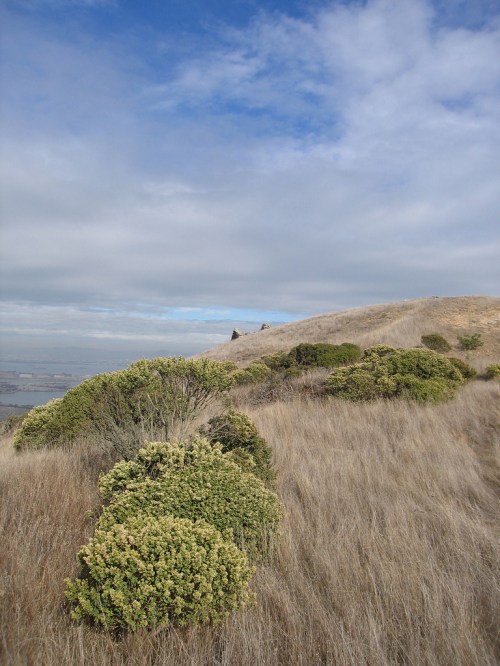
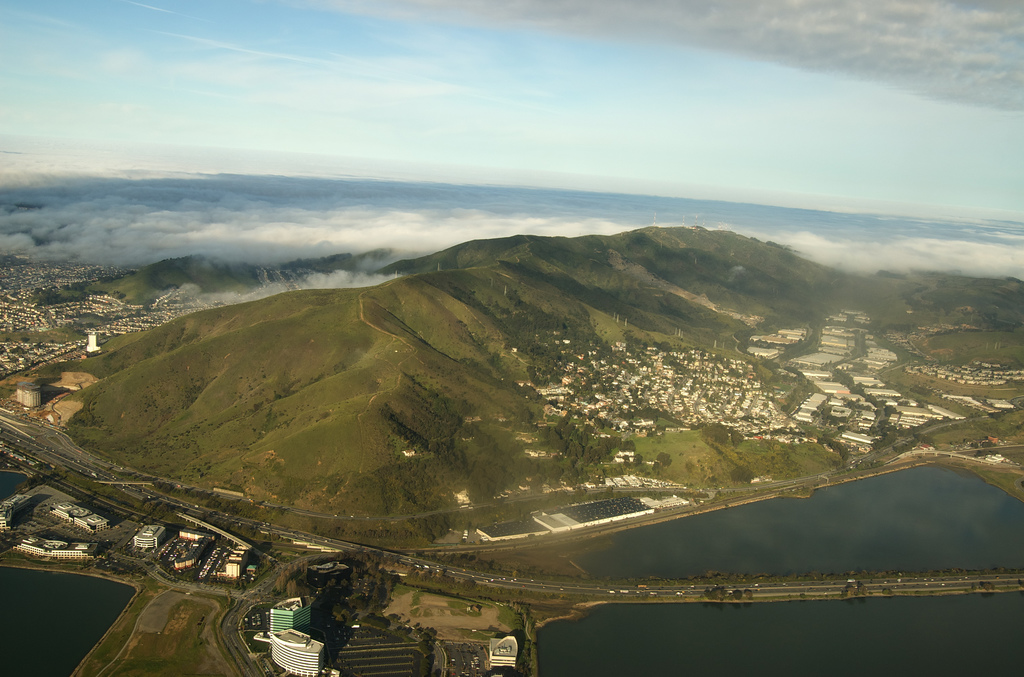
He has been working to protect San Bruno mountain for 45 years, and there are still threats chipping away at what is left of the San Bruno’s natural state. Dave gave us a tour of the mountain, its canyons, dense scrub, oak woodlands, its foxes, coyotes, and mountain lions, its wild flowers, and birds, and its long history. There have been humans around and on the mountain for thousands of years, as evidenced by any number of shell mounds.

The mountain might have been developed much earlier, without much of a fight however, if it had not been for garbage. As the areas around train tracks between Brisbane and Candlestick became a dumping ground for San Francisco, there wasn’t much interest in living next to the smells of rotting garbage.

Real threats came back to the mountain when the Bay Area as a whole began to wake up to the state of the environment and the bay itself. With the area cleaned up, great hopes began to arise about what could be done. There was even plans to shave the top of the mountain off and make high rises. Most of the mountain at the time was owned by the Crocker Family. While there is land preserved as park, land donated to and donated by the county, there is still plenty of private land that might be developed.

Much of the fight has centered around endangered species like the Mission blue butterfly. The butterfly’s endangered status saved the mountain from further development. That and the efforts of people like Dave Schooley, and all those who came out to fight and protest development plans. The big dividing line in mountain activists has been around endangered species on private land. A loophole to the ESA, called Habitat Conservation Plans were invented at this time. It allows landowners to develop their land, provided they can recreate that habitat elsewhere. In practice this has not worked out. It’s lack of accountability, and test-ability aside, the practice of using HCPs has now spread nation wide.

The problems and challenges aside, Dave, still seems to have great hopes for the mountains and the wider region… proposing wild life corridors between the mountain and Lake Merced, McClaren, and lands to the south.

More information:

San Bruno Mountain from the airSaving San Bruno Mountain: Past, Present, & Future
Guest Speaker: David Schooley
7:30pm, Thursday, May 17th, 2012
FREE at the Randall Museum, 199 Museum Way, San Francisco, CA 

David Schooley has been leading hikes focusing on the nature, history and native culture of San Bruno Mountain for thirty years. He is one of the founders of San Bruno Mountain Watch, an environmental activist group dedicated to saving the mountain from development.

Find out more about San Bruno Mountain Watch.

The lecture below originally scheduled for May 17th, 2012, has been postponed. The speaker, Ariel Rubissow Okamoto, is not able to come speak this month due to unforeseen circumstances.  We hope to have her later in the year. 

The UNnatural History of San Francisco Bay
Guest Speaker:  Ariel Rubissow Okamoto

Date TBD

Journalist and author Ariel Rubissow Okamoto will answer a few burning questions from her new book Natural History of San Francisco Bay: How do you “make” a wetland if you’re not Mother Nature? If you throw a dead body of the GG Bridge where will it end up? Why splashing in the surf off Crown Beach might you give something like poison oak?

Ariel Rubissow Okamoto is a freelance writer living in San Francisco, who has been writing about environmental issues for 25 years, more recently specializing in California water issues. You can find out more about Natural History of San Francisco Bay here.

Artists Nancy King & Mary Swanson met in an art class not too long ago. They became fast friends and embarked on a singular project to draw a natural cross section of San Francisco.

The 16′ long panoramic drawing shows nine of San Francisco’s habitats with their birds, animals and plants, from sea to bay: ocean cliffs, cypress forests, marsh, meadow, rocky hills,  grasslands, oak, coastal scrub, and tidal wetlands.

Drawing all this in “plein air” is not a comfortable thing, and Nancy & Mary were often cold, wet, hot, thirsty (probably often in the same day, given SF weather!). They persevered carrying their sketchbooks, water color paper, pencils, and water color, and they kept drawing for over a year. Nancy and Mary would sti down and sketch — divvying up the background, drawing half of  scene, and sketch, and sketch all the wildlife they saw.

In all of this they felt they came to understand the place a lot better, by paying attention to the ebbs and flow of the nature around us. From being watched by curious corvids on the cliffs, to coming across grazing goats near Heron’s Head park, to watching the beautiful courtship rituals of Grebes, they were always coming across surprises.

This slideshow requires JavaScript.